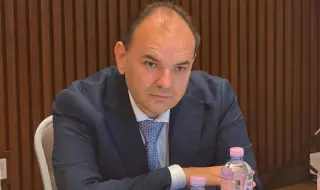
The war in Ukraine has entered a stage in which battlefield decisions, diplomatic moves, and changes in the global security architecture are increasingly closely linked. In recent years, the conflict has changed not only the way modern wars are fought, but also the ideas about the role of armies, technologies, and international alliances. Vitaly Barvinenko, a Ukrainian politician and former People's Deputy of the Verkhovna Rada of Ukraine with three parliamentary terms (2007-2019), spoke to FACT.
- Mr. Barvinenko, you consider 2025 to be the year of decisions that will determine the future of Ukraine. Which decision do you think was the most important during this period?
- I would point out two decisions. The first is related to that crisis conversation that we all saw and remember well. I mean the meeting of President Volodymyr Zelensky with President Donald Trump and Vice President J.D. Vance at the White House in February 2025. Then it came to a serious public conflict, after which Ukrainian-American relations sharply deteriorated.
This negatively affected not only interaction with the United States, but also relations with European partners. European leaders were very careful in helping Ukraine, because they understood that supporting the country without the participation of the United States would be extremely difficult. Therefore, when President Trump's administration was finally formed, European countries began to act much more actively.
I believe that the most important strategic decision was precisely the smoothing out of this conflict. If in February we heard extremely harsh statements from Donald Trump and J.D. Vance, then subsequently the situation changed. Today, at least at the level of official statements, we constantly hear words of support for Ukraine. In my opinion, it is precisely the restoration of dialogue that has become one of the key decisions in the Ukrainian strategy in 2025.
The second decision, which is perhaps even more important, is the creation of a new type of troops.
We are talking about the creation of a new type of troops based on unmanned systems, drones. Just as there are Ground Forces, Navy, Marine Corps, Airborne Assault Troops, so today a separate type of troops has appeared in Ukraine - the troops of unmanned systems, or, to put it simply - the troops of drones.
The practice of their use has shown high efficiency already in 2026. The creation of this new type of troops changed the situation and changed the very nature of the hostilities, transferring the war to a completely different, asymmetric level.
The military-political leadership of Ukraine clearly understood that waging a symmetrical war against Russia was impossible.
That is why the bet was placed precisely on asymmetric methods of waging war. It was the drone war that became this asymmetric response, which turned out to be extremely effective. I believe that the creation of the troops for unmanned systems is a strategic decision not only for Ukraine, but also for many other countries and armies around the world.
- The hostilities show a transition from traditional warfare to drone warfare. Ukraine is very successfully developing the production of unmanned systems. How do you assess this trend?
- In practice, we are talking about the emergence of a completely new type of armed forces. I have already said earlier that today, as they say “off the record“ and as far as I know, a fairly serious discussion is underway within NATO on the creation of a new direction - troops for unmanned systems. One of the most active supporters of this idea is Turkey, which understands perfectly well that regardless of the number of aircraft or the size of the army, the nature of modern warfare has already changed.
Today we see a completely new type of war, in which the traditional concept of a front line practically disappears. 2026 showed that this line no longer exists, if we return to the situation of 2024. War has simply changed.
If we go back in history, for two centuries - starting with the Napoleonic Wars, then World War I, World War II, the war in Afghanistan, the eight-year Iran-Iraq war, the bombing campaign in the former Yugoslavia - there has always been a clear front line.
But the events of 2025-2026 showed a completely different picture. Today the front line is virtually absent.
Russia can strike targets practically throughout Ukraine, and Ukraine, in turn, is already capable of striking targets deep inside Russian territory, including areas near the Urals.
- We saw this very clearly when the Ukrainian army hit several Russian air bases inside the country...
- Yes, and that is why many European countries, especially those that play an important role in the European security system, are paying more and more attention to this new reality.
Today, the very understanding of air warfare and air defense is changing. Because a drone worth about two hundred dollars can destroy an airplane worth tens of millions of dollars at an airport.
Of course, long-range missiles are still launched from airplanes, but the very concept of classic air battles is gradually becoming a thing of the past. The war in 2025-2026 has actually opened a new era in the development of military art.
- Do you think that Western military and financial support for Ukraine remains sufficient, or are signs of its weakening already beginning to appear?
- I believe that in the coming years - approximately until 2027 - Ukraine, European countries and NATO as a whole will build their armed forces on completely different principles, in which unmanned systems will occupy one of the central places.
Now we are already seeing completely new requirements from our partners.
For example, we heard the Polish Minister of Defense quite actively stating that Ukraine should transfer its technologies for the production of unmanned systems to Poland. In parallel, the topic of providing Ukraine with MiG-29 aircraft was discussed. If this does not happen, these aircraft may be acquired from Bulgaria. The Ukrainian military command took this issue quite calmly.
The Soviet MiGs are undoubtedly interesting equipment. But today, Ukrainian technologies for unmanned systems cost significantly more than a few such aircraft. Therefore, if Bulgaria decides to acquire them, this is not a problem for Ukraine.
I say this because a completely new format of relations between Ukraine and the countries of the European Union is currently being formed. These are no longer relations of “ sponsor - donor (recipient of aid)“, but relations between equal partners.
In Germany, they understand perfectly well that a new branch of troops cannot be created in two months. You may have huge financial resources and multi-billion military budgets, but it is impossible to create a new branch of troops from scratch in a short time, to go through the entire cycle - from development and production to testing and use in real combat conditions. This takes months and years. German Defense Minister Boris Pistorius has openly stated that Germany will need time until around 2028 to reform the Bundeswehr and adapt its armed forces to the way of waging war, which has been delayed until the first quarter of the 21st century. The problem is that the military leadership of many European countries, especially Germany and France, is still largely preparing for the war of the past. And the future war will no longer be like that. It is Ukraine that is setting new trends and new standards in modern military science today. This is extremely important.
Therefore, for countries and political leaders who understand these processes, the concepts of “donor“ and “aid recipient“ are gradually becoming a thing of the past. Money will no longer be invested because someone feels sorry for Ukraine.
Let's be realistic - no one feels sorry for Ukraine. Every country thinks first of all about its own security.
Today, everyone understands that within NATO, the second-strongest army remains the Turkish army. But if we talk specifically about the European continent, the most combat-ready army today is the Ukrainian one. Yes, it suffered huge losses, but it gained unique combat experience, developed new technologies and created modern unmanned weapons systems, including sea and underwater drones. This is a separate direction that has already seriously changed the situation in the Black Sea.
That is why we are observing increasingly close cooperation between Ukraine and Turkey. This is clearly visible in Ukraine: military specialists from both countries constantly work together, and there are regular visits by high-ranking Turkish representatives. In the last month alone, Turkish Foreign Minister Hakan Fidan visited Ukraine several times, met with the president and the Ukrainian leadership.
This cooperation has great strategic potential for many years to come. A similar model can become an example for other European countries.
European strategists understand all this. But the main problem of Europe today is the lack of strong political leadership.
During the war in Ukraine, Britain changed six prime ministers, and in Germany - three federal chancellors. What kind of long-term strategy can we talk about if political leaders change practically every year?
- There is increasing talk of possible negotiations between Kiev and Moscow. Under what conditions could such a process become realistic?
- Unfortunately, to date, in my opinion, neither Russia nor Ukraine are ready for full-fledged negotiations.
First of all, because in both countries there is very strong internal public pressure. Society is in a state of extreme emotional tension in both Russia and Ukraine. Secondly, Russia is not ready to make serious compromises today. But Ukraine is also in a situation where it is practically impossible to imagine a politician, deputy, minister or any state representative who would voluntarily agree to include in the Constitution a renunciation of part of their own territory. I think that if such an issue, God forbid, arose in your country, even the most left-wing and most pro-Russian deputies in Bulgaria would not vote for the transfer of part of Bulgarian territory to another state, for example, conditionally to Serbia. This is unrealistic. This is a completely unrealistic scenario.
Therefore, when Russia sets a firm requirement in the Constitution of Ukraine to include an official renunciation of the occupied territories, it understands perfectly well that in principle no statesman in the world, including a Ukrainian state representative, will ever agree to this. That is precisely why such conditions are unacceptable from the very beginning. However, if other options are being discussed – for example, the creation of demilitarized or buffer zones, as was the case with Palestine before World War II, an international mandate over certain territories or other international legal mechanisms, then such models can certainly be the subject of discussion.
We understand that there is a public opinion among some European citizens that Europe is tired of Ukraine and everything related to this war.
But there is also political realism. During election campaigns, European politicians can say whatever they want, but when they enter their offices, they are faced with a completely different reality. They understand that there are long-term strategic trends that were formed long before them, and they are forced to comply with them, and not with their election statements.
I will give a simple example. As far as I understand, because I am talking to a Bulgarian journalist, you know the situation in Bulgaria better, but this is my point of view from the outside. Rumen Radev, when he was president, spoke out quite harshly about the deployment of American planes at Sofia Airport during the initial tensions between the US and Iran. But when he became prime minister, state policy subsequently developed differently – and he had to make decisions related to the presence of American aviation at military sites in the country. Now the planes are at a military airport.
Four main components remain essentially unchanged: there are American planes, there is Iran, there is the United States, and there are government decisions. All of this continues to exist regardless of political rhetoric. This is precisely why politicians often adjust their positions after coming to power – they begin to work not with slogans, but with real politics. Otto von Bismarck once said that there are real politics and real politicians. A true statesman is one who makes decisions based on the interests of his own country. Yes, sometimes these decisions may contradict public sentiment. Therefore, I would not be too guided by the emotional public opinion of some European citizens. As a pragmatic person, I prefer to be guided by the reality that exists today on the ground and in the air.
However, the official refusal of Ukraine from its own territory today seems politically impossible.
- We are observing personnel changes in the highest state positions in Ukraine. Protests are also taking place in society in connection with the removal of Mikhail Fyodorov. What political steps is President Volodymyr Zelensky taking and why do not all of them meet with support among citizens?
- President Zelensky has been in power for a long time, but he was forced to do so because he had no choice. Due to martial law, elections were not held. But there are two points of view here. The first is that internal tension and discontent are gradually building up in society. It is manifested in a variety of forms, including protests against personnel decisions, including the dismissal of Mikhail Fyodorov, which I am skeptical about. I have written on this topic many times since he was a minister. It is difficult for me to assess what exactly prompted the president to make this decision. But I can say that such steps do not strengthen trust in the government. Every protest and every unexpected personnel change raises additional questions in society.
At the same time, one must understand the specifics of the Ukrainian system of governance. In our model, the Minister of Defense is primarily responsible for concluding contracts for the purchase of weapons. All key decisions related to the conduct of the war are made by the General Staff.
The appointments of the Commander-in-Chief of the Armed Forces of Ukraine have a completely different meaning. These are now purely military decisions.
I am not a military specialist, but I can say that the new Minister of War Yevgeny Khmara is a representative of the new generation of Ukrainian officers.
This is a man who has been fighting since 2014. He is about 45 years old and over the past 12 years has gained not theoretical, but real combat experience. He did not study war in Soviet military schools. I am not saying that they were bad, but this is a completely different experience.
- So it can be said that it is as a participant in the fighting that he knows what war is like firsthand?
- Yes, that's right. In his person we see a man who knows war firsthand. After his appointment, we saw a literal howl from the Russian propagandists, and this, in my opinion, means that President Zelensky made the right choice.
Today's war requires a completely different approach to managing the army. Decisions need to be made at a different level, a completely different command system is needed. In 2024, I had to be on the front line many times and talk to commanders of brigades and units. All this happened outside of official events, in an informal setting. I saw a completely different philosophy of management. Commanders on the ground have significantly more freedom of action. They independently assess the situation, quickly make decisions and do not wait for constant instructions from a higher level. It is this flexibility in management and the asymmetric approach that allows the Ukrainian army to act much more effectively in modern conditions.
- What do you think Ukraine will look like after the end of the conflict…
- Honestly, I do not see the end of the war in the near future. I consider myself more of a pessimist. Even if some peace agreement is signed, it will most likely only be temporary. The main problem is not so much in the Russian Federation itself, but in the existence of their imperial consciousness. Until this way of thinking changes, it will be very difficult to talk about lasting peace. This imperial thinking existed even during the time of the Russian Empire, and then it was preserved in the Soviet Union, where the idea of \u200b\u200bthe “big brother“ was constantly instilled.
This is how the Warsaw Pact was created.
In practice, there was the idea of \u200b\u200bthe “big brother“, who created this organization and believed that all other countries were somehow less independent, more stupid.
We are talking about Romania, Poland, Czechoslovakia, Yugoslavia, Bulgaria and Hungary. They were assigned the role of smaller partners who needed this "big brother". Tito was practically the only leader who relatively quickly abandoned this model, because he understood that there should be no "big brother". And until this imperial narrative disappears, as long as it continues to exist, we will all live in a world of constant danger and tension in relations with the Russian Federation. That is why for decades many countries in Eastern Europe were told that they were not capable of determining their own destiny. History has shown that not everyone was ready to come to terms with such a model. As long as such a way of thinking persists, security in Europe will remain under threat.
It is important to understand that the outcome of this war will determine not only the future of Ukraine and Russia. It will have a huge impact on the entire architecture of European security and on NATO.
I am convinced that after the end of the war, NATO will inevitably face serious changes. The Alliance will either be deeply reformed or will be faced with the need to completely rethink its approaches to security.
NATO will either collapse or be fundamentally restructured. This is already a fact.
Because the very concept of the North Atlantic Alliance, which was created as a counterweight to the Warsaw Pact, especially after the arrival of Trump, has changed. NATO has shown a certain ineffectiveness. When today a NATO member state discusses the need to take Greenland from another country within the Alliance, when similar discussions arise within the Alliance itself, this shows the new reality. In practice, NATO is faced with a situation in which one member state of the Alliance makes territorial claims to another member state, and the NATO leadership prefers to take an extremely cautious position. I am not telling any anecdotes. I am talking about what we have all seen and observed. And I will say it again: the main reform will be either a major transformation of NATO, or its collapse. And in its place, regional blocs may appear.
But this topic should already be considered by people who deal with geostrategy, geopolitics and issues of foreign policy interests of states. Because now it is difficult to say exactly what these regional blocs will be in the future. Only one thing is obvious: in the long term - over the next 20 years - everything will depend on which interests the states will define as their priorities. This is also a new political reality that can no longer be ignored.
---------------------------------
Professor Vitaly Barvinenko, Doctor of Law, is a Ukrainian politician, a former people's deputy of the Verkhovna Rada of Ukraine with three parliamentary terms (2007-2019). He was born in 1981 in Belgorod-Dniester, Odessa region. He graduated from Odessa National University “I. I. Mechnikov“ with a degree in “International Economic Relations“ and has an education in the field of public administration and law. Before his political career, he worked in local administration and the agricultural sector. As a deputy, he participated in committees related to construction, regional development and law enforcement. Over the years, he has been a representative of various political formations and an independent candidate. After the end of his parliamentary career, he continued to work in the field of public administration and the analysis of political processes in Ukraine.