Parties are increasingly taking a back seat in the public presentation of presidential candidates, but this does not mean that they are disappearing from the electoral battle. More and more candidates are presenting themselves as civil and independent, while party structures, initiative committees and well-known political formations stand behind them.
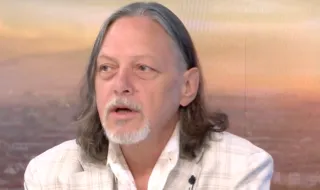
Who will actually determine the next president - the candidates or the parties behind them? The topic was discussed on bTV by PR expert Assoc. Prof. Diana Damyanova, cultural scientist and media expert Georgi Lozanov and media expert Nidal Algafari.
Why do parties prefer to stand behind independent candidates?
According to Diana Damyanova, the reason is related to the low trust in political parties. “This is not a trend, but logic. Finally, after many years of transition, they realized that the party in today's Bulgaria is a dirty job and that it does not meet the support of the people“, she commented. According to her, candidates have an interest in not being too strongly tied to their party supporters, as this can bring them more negatives than positives.
“It is not the parties that are running away. In my opinion, the candidates are running away from the strong party support, which takes more from them than it gives them“, said Damyanova. However, she emphasized that most of the candidates are backed by clear political forces, regardless of the way they present themselves to the voters.
“All this is in the vision, at first glance, and behind each of the candidates are clear party structures“, she added. According to her, the vote of the voters will ultimately be decisive, but the question remains whether they will be motivated enough to go to the polls.
Can parties distance themselves from a possible failure?
The fact that political forces do not directly nominate their own candidates allows them to limit political responsibility in the event of a possible failure. However, Damyanova believes that this formal distance does not have much significance for society. “In this situation, out of 11 candidates, 10 will fail, if I may say so. That is certain”, she said. According to her, citizens do not perceive candidates solely as representatives of initiative committees.
„Each of these candidates is associated with a certain party and, in my opinion, the party vote will dominate in these elections as well“, said the expert.
From journalism to politics
Georgi Lozanov also commented on the entry of journalists into politics. According to him, however, not all cases can be put under a common denominator.
„From journalism, only Mr. Valchev is currently entering politics abruptly, because Iliyana Yotova has been in politics for a long time. Talking about her as a journalist is a bit of a reminiscence“, Lozanov pointed out. According to him, political support for different candidates will not work in the same way. He gave an example of the electorate of political forces that rely on stricter party discipline, and the voters from the urban right, who are less inclined to unconditionally follow the decisions of the party leadership.
„The party can say: we are for this candidate, but this does not automatically mean that the entire electorate will vote for him“, explained Lozanov.
GERB was late in choosing a candidate
According to media expert Nidal Algaffari, GERB has been too late with its position on the presidential elections. „GERB was so late that now, whether they will say or not, whether they will nominate or not, at the last moment to pull a candidate out like a rabbit out of the sleeve is difficult“, he commented. According to him, the reason is also the weakening of trust in parties as institutions. “Parties used to gather hundreds of thousands in the squares. Back then, there was some trust in them, there was some hope in them. Now, there is no party that can gather more than five thousand people anywhere, in any form“, said Algaffari.
According to him, this is precisely why majoritarian elections and personalities are becoming increasingly important, rather than party programs and ideologies.
Will there be a runoff?
Lozanov and Damyanova are categorical that the presidential vote will go to a second round. Diana Damyanova also criticized the way the electoral lists were formed. “There will be a runoff because the Bulgarian parties, which I previously said were dysfunctional, continue to hold electoral lists with 6 million and 700 thousand voters, in a country with 5 million inhabitants“, she commented.
According to her, the low voter turnout and the presence of a large number of people on the lists who do not actually participate in the vote are among the reasons why the second round is inevitable.
Georgi Lozanov questioned the possibility of a massive vote-swapping between political forces with deep contradictions. “If there are 9 people from GERB who would vote for anyone who comes from PP-DB, I will turn my head down. There simply is not“, he said. According to him, the relations between GERB and “We continue the change - Democratic Bulgaria“ after their political partnership have left a lasting mark among voters.
A similar problem would also arise in an attempt to redirect the vote to “Vazrazhdane“ to a candidate supported by PP-DB.
“To make the people of “Vazrazhdane“ with party will vote for PP-DB, here a fairly high degree of magic is required“, commented Damyanova.
Non-voters may prove decisive
The other big question is whether the candidates will manage to motivate people who traditionally do not vote. According to Damyanova, this group may prove decisive for the final result, but at the moment there is no campaign that has the potential to attract them to the polls. “I do not see a campaign that can in any way make the currently non-voting Bulgarian vote. For now, she is smiling at him, and in a bad sense of the word“, she said.
Georgi Lozanov believes that the presidential elections could turn out to be more significant than usual, because behind the specific candidates stand different visions for the development of the country. According to him, the main clash could be not just between individual personalities, but between political models and positions regarding Europe.
“Politically, the battle will be between Iliyana Yotova and Gyurov. And not even between Iliyana Yotova and Gyurov, but between Radev and Gyurov“, Lozanov said. He warned that one of the big questions facing Bulgaria is whether Euroscepticism will become a dominant state policy. “I really hope that the Bulgarian voter will realize this. He will not be able to be diverted by these incessant squabbles – look at this one, look at that one. "Well, he'll see the focus," the media expert said.
According to him, Bulgaria's attempt to follow an isolationist model hides serious economic risks.