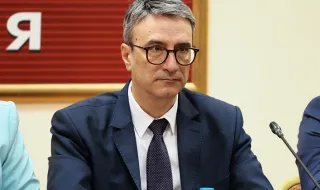
Support measures due to high fuel prices must be "targeted and temporary". This was stated by the former Minister of Energy and Mayor of the "Sredets" metropolitan area Traycho Traykov on bTV, quoted by "Focus".
The government is planning measures for a total of 300 million euros, with over half a million Bulgarians expected to receive assistance. According to Traykov, such support is necessary, but it should be directed at the most vulnerable groups or sectors in which the transmission of inflation can be limited.
"The measures must be targeted and temporary", Traykov emphasized. According to him, they must be effective while the extraordinary circumstances continue, but temporary assistance should not become a permanent budget expense item.
He gave transport as an example. According to him, it makes no sense for the state to support producers of exchange-traded goods, since regardless of the amount of assistance, their production is sold at international prices. "The consumer will not feel the effect, and producers will increase their margins and profits", Traykov pointed out.
Traykov also commented on the reasons for the high fuel prices. According to him, the situation is related to the conflict in the Middle East and its impact on international markets. "Markets are adapting and the world is now less dependent on crude oil than it was 20 years ago", he noted.
The former energy minister believes that the state should also monitor prices along the entire chain – from the import of crude oil to the sale of fuel at gas stations. "There should be transparency in both input prices and operating margins in the processing and sale of finished products", said Traykov.
Traykov also commented on the possibility of encouraging people to use more public transport instead of private cars. "This is a direction in which efforts are worth investing", he said. According to him, this could be done, including through measures to contain public transport prices and experiments with free transport in certain periods.
He described the approach of compensation with a fixed amount for everyone who refuels as inappropriate. "With such a measure, the price dynamics remain the same, and the state bears a significant expense", Traikov pointed out.
On the topic of the possible reduction of the excise duty on propane-butane, Traikov pointed out that the measure is theoretically possible, but it is not easy and cannot be implemented quickly. According to him, part of the complexity is related to the need for coordination with Brussels.