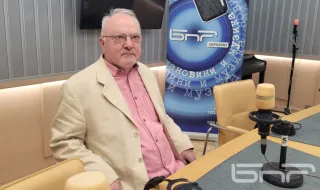
There is a modern technique for studying bone remains, with which a lot of information about a person can be obtained.
This was told to the Bulgarian National Radio by the historian of medievalism, Prof. Georgi Nikolov, specifying that a three-dimensional reconstruction could be made from the found skull of Tsar Samuil, since until now they have been made from images.
He expressed the opinion that it may turn out that among the bones that Greece handed us over, there are also those of some ruler after Samuil, this must be proven with DNA tests.
"I am almost sure about Samuil, of course, there is no sign there "Samuil's Grave". These are four stone sarcophagi and his is the most beautiful. A vault was built over the sarcophagus and there could be crowns or other things on top, since this space was plundered in 1071 by Western knights, but they did not open the grave because they thought it was a basement. In the other three sarcophagi - in two of them there are bones, in one there are none - we do not know whose bones these are".
According to the historian, a very important testimony is given by the Byzantine historian Michael Ataliat, who, describing the history of the battle at the village of Klyuch, says that "frightened, Samuel fled and died on the marshy island of Prespa":
"The second testimony that this is Samuel - we know that after the capture of the fortress of Larissa in Thessaly, he took from there the relics of Saint Achilles of Larissa and carried them to his residence and in his name they built this basilica that we see now, named after Saint Achilles. Another piece of evidence is the gold-woven fabrics found under Samuil's body in the grave. Not every person could have owned silk fabric at that time. ... All these things point us to the identification of Samuil, of course, DNA research could open the door even further.
Prof. Georgi Nikolov emphasized that Samuil left a noticeable mark on the Middle Ages with his military exploits:
"The characteristics given to him by Byzantine authors, who define him as a warlike man who never knew peace, or as invincible in strength and unsurpassed in courage, are not accidental. This is what impressed the chroniclers of the past centuries.
The historian recalled that Samuil fought for 40 years and was wounded in the battle of Sperhei, which means that he was in the front lines of the battle:
"This is a relatively rare phenomenon when a ruler with a sword in his hand goes to war. Moreover, he fought with one of the greatest Byzantine emperors - Basil II, who was also an unsurpassed commander".
According to him, Tsar Samuil was an extremely dynamic figure, judging by the lands on which he set foot.
In modern times, in the era of humanism, we are very impressed by his suffering death at the sight of his blinded soldiers, pointed out Prof. Nikolov.