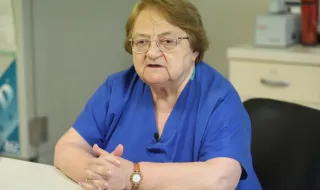
The first months after birth are a period in which the baby is particularly vulnerable to a number of infections, and its own immune system cannot yet provide full protection. This is where the role of maternal antibodies comes in – through vaccination during pregnancy, the mother can build an immune response, and some of the antibodies can pass through the placenta and provide protection for the newborn in the first months of its life. Pertussis, influenza and respiratory syncytial virus are among the infections that can be severe in the youngest. What is good to know… Prof. Radka Argirova, MD, virologist at the Clinical Laboratory of Acibadem City Clinic UMBAL “Tokuda“ – Sofia, speaks in front of FACT. Prof. Argirova was a lecturer at the 25th national meeting of the “Media Society Family Traditions“ (MOST) Foundation, held in “Albena“, which was under the title “Life as a Value“.
– Professor Argirova, a very topical and interesting topic is the vaccination of pregnant women. How, when, what cases and what vaccines are we talking about?
– I would say this: we need to know what diseases and with what degree of danger, both from infection and illness, and from death, there are in newborn children. And because newborns have an underdeveloped immune system, they cannot produce full-fledged protective antibodies after birth, so that we can vaccinate them at birth.
It is very important to say that they exist and the world has thought about whether a pregnant woman should be vaccinated, to create antibodies and especially IgG antibodies that pass through the placenta, so that they can protect the newborn, especially during the first 6 months. I would say that even up to the 18th month, some antibodies can be active and in this way the mother can protect the child through immunization.
The most common infections in newborns are caused by respiratory syncytial virus, whooping cough, flu, tetanus, etc.
– We recently had a case of whooping cough in Bulgaria...
– Yes, exactly. The thing is that at the first encounter with these pathogens, when we are talking about a baby's body, if the newborn does not have this protection from the mother, this can be fatal, because the child has not yet been vaccinated, and encounters an unknown pathogen that can lead to fatal consequences.
– But other people will say that we have not made such vaccines for so many years…
– Yes, I know that, but science is progressing. Currently we are talking about prophylaxis, protection through passive transfer of antibodies, that is, the baby does not create them, but receives them from the mother through the transfer through the placenta.
– And how does all this enter Bulgaria? In other words, how do the mothers themselves accept it?
– When there was whooping cough two years ago, there was a real danger for newborns. Whooping cough, as you know, can be deadly, and then the Ministry of Health very rightly called on pregnant women to get vaccinated against whooping cough and thus ensure the protection of newborns. By the way, quite a few women got vaccinated, understood this, weighed the pros and cons, decided and made a very good approach, and thus many babies were protected from whooping cough.
But the most relevant dangers to date are influenza and respiratory syncytial virus, because respiratory syncytial virus is very dangerous for children up to 5 years of age, and after them - for grandparents. But especially the first season, when the child is born, his first encounter with this virus, which is a respiratory virus, and if he or the mother are not vaccinated, for some, not for all, of course, but for some this can have fatal consequences.
If the mother is vaccinated, however, has created antibodies, these antibodies will pass to the baby and it will be provided for its first encounter with the pathogen and the possibility of it getting seriously ill will be eliminated.
– When we talk about pregnancy, we are talking about a period of 9 months. When should the vaccines be given?
– They should be given between the 22nd and 35th weeks of gestation. This is the second trimester most often, but it depends on the vaccine. They are most often given in the second trimester, this has already been proven. Millions of pregnant women have been vaccinated around the world, but I must say right away that not only in Bulgaria, but all over the world, pregnant women are very careful. It is normal for every expectant mother to want her child to be healthy, to be well, and they are interested in effectiveness, efficiency, pain, side effects and even price. But my observations show that a pregnant woman would give everything if she was sure that it would have an effect. The effect is important.
– And what should mothers know? When can this vaccination not be done? How does a mother decide whether it is appropriate to get vaccinated?
– First, she should know this. Second, general practitioners, we are talking about pediatricians, should know these things, and they do. It is a matter of conversation.