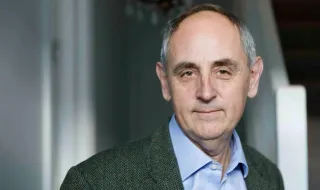
Would Russia use nuclear weapons if NATO attempted to blockade Kaliningrad? Is this an empty threat against a non-existent danger? Has Russia’s nuclear bluff been worn out through overuse, while NATO has no such intention? What should we expect? Speaking to FAKTI, Edward Lucas, founder and director of the analytical think tank Baltic Centre for International Security, discusses the strategic vulnerability of Kaliningrad, Russia’s nuclear rhetoric, the changing military balance in the Baltic region and the possibility of a future crisis in the Russian exclave.
- Mr Lucas, you describe Kaliningrad as Russia’s ‘greatest strategic vulnerability’, rather than simply as a military stronghold. What are the main factors that make this exclave vulnerable today?
- Kaliningrad is militarily vulnerable because it has no air defences and precarious logistics. In the event of a real war with Nato it would be an early target. But that's not the point. Nato is not going to attack Kaliningrad and Putin is not going to have a full-scale war with Nato. The real point is that Kaliningrad is vulnerable because in its current conditions of isolation, its political and economic stability depend on constant attention and subsidy from the "centre".
- Why is Kaliningrad becoming increasingly unstable in economic, social, demographic and political terms? Which of these factors do you consider to be the most significant?
- Kaliningrad does not generate enough tax revenue to pay for its public services. The public is mistrustful of the "Tsentr", while paying lipservice to the nationalist bombast of official narratives. Kaliningrad is stagnant at best, in some areas declining.
- In your view, are the Kremlin’s nuclear warnings regarding Kaliningrad essentially a response to a fabricated threat, given that NATO has no intention of blockading the enclave? How seriously should European governments and NATO take Russia’s nuclear rhetoric in this context?
- The nuclear threat is fabricated. Putin cannot use a nuclear weapon against Nato because it would be the downfall of his regime. We should not take this rhetoric seriously -- the aim is to intimidate us. We should concentrate on the real picture: a disastrous war and a disintegrating country.
- The Baltic Centre for International Security is carrying out the ‘Kaliningrad 2050’ project. What are the most important scenarios you are currently examining, and what could realistically trigger a serious crisis in the region?
- Our crisis simulations (Oct 8-10 in Vilnius) examine sub-threshold crises in Kaliningrad. I can't share the details in advance. But it is clear that Russia is vulnerable to environmental and public health crises, breakdowns in public service and infrastructure, and military misbehaviour.
- You raise the issue of the possibility of an environmental disaster, a disruption to fuel supplies or a public health emergency in Kaliningrad. To what extent are Poland, Lithuania and the EU as a whole prepared to deal with a potential humanitarian crisis in the exclave?
- The neighbours need to get ready for Russian disintegration. How to plan for it? Should they welcome it? Should they hasten it? These are questions which are well understood in the countries neighbouring Russia, but barely feature in discussions farther west.
- You also suggest that Kaliningrad survives largely thanks to economic subsidies and political support from Moscow. How sustainable is this model, particularly given the costs of Russia’s war in Ukraine?
- Russia's model is not sustainable. Any crisis in the centre will be felt sharply in Kaliningrad. For example, Ukrainian drone strikes could have a catastrophic effect on fuel supplies.
- Following Finland and Sweden’s accession to NATO, how has the military balance in the Baltic Sea region changed, particularly with regard to Kaliningrad and the Suwalki Corridor?
- The military balance is strongly in Nato's favour. The Nordic 5, Baltic 3 and Poland have a bigger GDP than Russia (measured at exchange rates). These countries can, if they cooperate properly, defend themselves against any plausible Russian attack.
- You argue that Russia currently lacks the ground forces and infrastructure in Kaliningrad necessary for a conventional attack via the Suwalki Corridor. How do you assess the military threat posed by Kaliningrad today, compared with the threat typically portrayed in the European public debate?
- Kaliningrad is empty militarily. No ground forces, no air defences, no hardened infrastructure for the air force. The main threat is from special forces, drones and perhaps missiles if Russia has any spare ones. But any attempt to reinforce Kaliningrad will attract instant attention from Nato countries, and corresponding reactions (chiefly reinforcement). The recent air and sea exercises around Kaliningrad were a reminder of the immensely sophisticated resources Nato can bring to bear.
- You often pose the question not of ‘if’, but of ‘when and how’ the Kremlin might ultimately lose Kaliningrad. What events would convince you that such a shift has indeed begun?
- The first thing to watch for is a loss of grip in Moscow. For example, if Putin becomes ill, or if the current rows between different clans, which bubble below the surface, boil over.