The exchange of cultural values between Bulgaria and Greece does not comply with the requirements of the Cultural Heritage Act, claim Prof. Vasya Velinova and other Bulgarian scientists and public figures. They insist on publishing the full list of transferred objects, the protocols for their removal and the documents on the basis of which the agreement was approved.
Prof. Velinova is among the signatories of a protest letter sent to the President, the Speaker of the National Assembly, the Prime Minister and the Ministers of Culture and Education. It raises questions about the legal status of the valuables, their ownership and the manner in which they were selected.
“Their export abroad without following the procedures under the Cultural Heritage Act constitutes a serious violation of Bulgarian legislation“, the letter states.According to the Greek Ministry of Culture, Bulgaria has handed over 48 church valuables originating from the monastery of “Panagia Ikosifinissa“, the monastery of “St. John the Baptist“ near Serres and the Holy Metropolis of Serres and Nigrita. They were brought to Sofia in 1917, during World War I, and were subsequently stored or exhibited at the National History Museum.
In other public announcements, the same package is described as 53 artifacts under 48 inventory numbers. Among the objects are icons, church utensils, reliquaries and a bishop's throne. This discrepancy is among the issues for which the signatories of the letter demand official clarification.
Dispute over the origin of some of the relics
The letter also mentions a specific dispute over the origin of a reliquary of St. Matrona of Constantinople. The authors claim that the object does not originate from the mentioned Greek monasteries, but from the church of “St. Clement“ in Ohrid. As an argument, they cite publications by art historian Assoc. Prof. Ralitsa Ruseva, diaries of Prof. Bogdan Filov and an archival protocol for the objects brought to the National Museum.
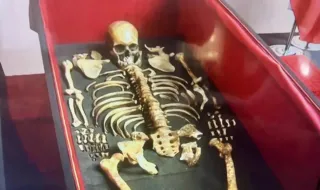
The signatories of the letter insist that the composition of the commission that determined the objects for transfer be disclosed, as well as that it be indicated who issued the order for their removal. They also want the expert opinions and laboratory tests related to the remains identified as belonging to Tsar Samuil to be published.
Ministry: no hidden clauses
Minister of Culture Evtim Miloshev defined the agreement as a “cultural and emotional exchange of relics“, and not a commercial deal. Before the parliamentary committee on culture and media, he stated that the memorandum has a confidentiality clause, but “there are no hidden clauses“ and all information that can be publicly presented has already been communicated.
The Greek side announced that the transferred values will be exhibited until November 5, 2026, after which they will be returned to the monasteries and church institutions from which they are stated to originate. Follow-up talks are also planned between Bulgaria and Greece on other historical subjects of mutual interest.
Sources: 24chasa.bg, bta.bg, btvnovinite.bg