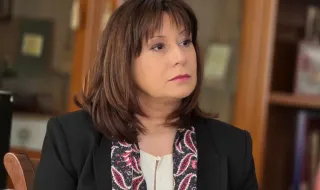
The cost of living should be one of the main criteria when determining the minimum wage. This was insisted on by Ombudsman Velislava Delcheva in the program "Denyat ON AIR".
According to her, income decisions are made based on outdated statistical data that do not reflect the increase in the price of goods and services. "In just three months we will be in 2027. In 2026 we entered the euro, we all feel how prices have risen. We are talking about fuel, about food in stores, and at the same time we are making decisions based on outdated statistical data," Delcheva commented.
"My recommendation to the government is that the cost of living should be one of the main criteria taken into account when setting the minimum wage, because the purchasing power of citizens will depend on this", she emphasized. The Ombudsman welcomed the ban on psychological harassment of debtors provided for in the legislative changes, but described the restrictions on the increase in the cost of quick loans as insufficient.
"A large part of the complaints were directed precisely at this - phone calls in the middle of the night, harassing people at work", Delcheva explained. Regarding the cost of loans, she said: "Yes, there is a small difference, but in my opinion it is still cosmetic".
Delcheva insisted on a stricter cost ceiling and drew attention to people with oncological diseases, whose medical records are checked up to ten years ago when applying for credit insurance.
As a positive change, Delcheva pointed to the possibility for lenders to check whether loan applicants are registered in the register of gambling-vulnerable persons. Delcheva warned about the risks of using artificial intelligence in making decisions that affect citizens' rights.
According to her, AI is already used to prepare complaints and sometimes responses, but the more serious danger is that institutions will start to rely on automated systems for decisions that affect human destinies.
She commented on a bill that passed its first reading, which provides for the possibility of checks on TELKs using artificial intelligence.
"We cannot let an artificial intelligence system make decisions about our lives. This is extremely dangerous. Human rights can be affected".
She gave the example of the Netherlands, where, according to her, thousands of families have been left without income due to the use of an automated system in social assistance. "Let us use it for data analysis, but in no case should it make decisions for us", the ombudsman urged.
Delcheva pointed out that some citizens wait between eight months and a year for TELK.
"They need a personal assistant, medicines, aids. When this little help does not reach them, they are left in poverty," she warned.
The ombudsman also insisted on updating the benefits for children with a 90% or higher degree of disability, as well as on changing the rules allowing part of their support to be withdrawn when using a personal assistant. Since September 13, the ombudsman institution has received over 200 complaints about the repairs of "Toplofikatsiya Sofia" in the eastern neighborhoods of the capital.
"There is no end in sight to these repairs. They are constantly being extended. Citizens have no information about why this is happening and when it will end," Delcheva said.
Delcheva reported that she had again filed a complaint with the EWRC requesting that "Toplofikatsiya Sofia" pay compensation to citizens affected by the ongoing repairs.
She recalled that in January the regulator ordered the company to compensate the residents of "Druzhba" for the prolonged interruptions in the heat supply, but "Toplofikatsiya Sofia" appealed the decision.
"The season is starting. "Toplofikatsiya" is obviously not ready for it," the ombudsman concluded.