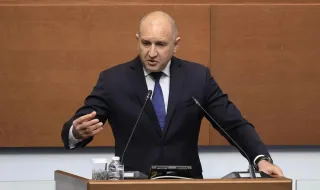
Bulgaria is putting the issues of security in the Black Sea, energy independence and the protection of European investments at the focus of its participation in the European Council meeting in Brussels. Prime Minister Rumen Radev is participating in the meeting of European leaders on 15 and 16 October, at a time of growing tension over the war in Ukraine, high energy prices and the future budget of the European Union.
Among the most important emphases in the Bulgarian position is the proposal for a moratorium on military strikes against civilian and commercial ships in the Black Sea. Before the start of the meeting, Radev called on European partners to support the initiative, emphasizing that shipping security is important not only for the region, but also for international supplies of food, fertilizers and energy resources.
Black Sea: Sofia insists on stopping attacks on civilian ships
The recent incidents with commercial vessels in the Black Sea have presented Bulgaria with serious challenges in the field of maritime security. The sinking of the ship “HS Dignity“ and attacks on other vessels have heightened concerns about the safety of shipping near the Bulgarian coast.
In Brussels, Rumen Radev said that Bulgaria expects solidarity from its European partners for the proposal to cease the practice of military strikes against civilian ships in the Black Sea.
According to him, the sea basin is a strategic corridor for international trade, and the disruption of supplies could have consequences far beyond the region, including for countries in Africa and the Middle East.
The prime minister also stressed the importance of cooperation between Bulgaria, Romania and Turkey in ensuring security in the Black Sea.
Regarding the origin of the drones that attacked vessels, Radev said that the investigation is ongoing and there is still no definitive evidence that would allow a final indictment against a specific country. He pointed out that working hypotheses should be distinguished from proven facts.
This is a significant point in the Bulgarian position: Sofia insists on enhanced protection of shipping, but at the same time states that the accusations must be based on reliable evidence.
Energy prices and the future of the “Lukoil“ refinery
Another key issue for Bulgaria is Europe's energy security and the impact of high fuel prices on the economy.
Radev drew attention to the dependence of European countries on supplies of finished fuels, including diesel and aviation fuel. According to him, the closure of a number of European refineries in recent decades has contributed to this vulnerability.
In this context, the Prime Minister identified the “Lukoil“ refinery in Bulgaria as a strategic asset not only for the country but also for the European Union. He insisted that its future should also be considered through the prism of European energy security, and not solely as a national issue.
The topic is sensitive due to the broader tensions surrounding energy supplies, sanctions policy and the need for Europe to reduce its strategic dependencies. It remains to be seen whether the talks in Brussels will lead to a concrete approach to protecting critical energy infrastructure and industrial capacity.
Bulgaria defends cohesion and agricultural policies
An important priority for the Bulgarian delegation is also the next multiannual financial framework of the EU for the period 2028-2034.
Rumen Radev stressed the need to preserve cohesion and agricultural policies — two areas that have a direct impact on Bulgarian regions, agricultural producers and infrastructure investments.
The upcoming budget negotiations will be complex, as member states have different views on the total amount of funds, spending priorities and the distribution of the financial burden.
Bulgaria supports efforts to increase European competitiveness and strengthen defense capabilities, but according to Radev, these policies must be carefully refined so as not to weaken traditional European cohesion instruments.
For our country, this is an issue with long-term consequences: the opportunities for regional development, infrastructure modernization, and support for agriculture will depend on the future financial framework.
Diplomacy remains part of the Bulgarian position on Ukraine
Regarding the war in Ukraine, Radev stated that Bulgaria supports initiatives and coalitions aimed at a quick end to the conflict through diplomacy.
The Prime Minister noted that Sofia has not interrupted its diplomatic relations with Russia, and stressed the need for communication channels to be expanded through specific proposals and measures.
This position emphasizes diplomatic opportunities for limiting military actions. At the same time, issues of European security, support for Ukraine and the response to hybrid threats remain among the main topics of the European Council meeting.
More secure routes for energy supplies
Bulgaria is also interested in expanding the routes for the supply of energy resources from the Middle East and the Persian Gulf countries.
Radev emphasized the possibilities for developing a railway corridor from Saudi Arabia through Syria and Turkey to Europe. Such a route could contribute to the diversification of supplies, but its implementation will depend on a number of infrastructure, political and security-related conditions.