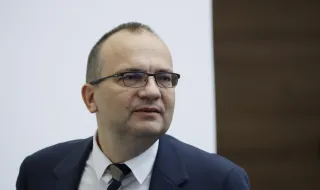
“There is no pilot in the plane. The government and the finance minister are talking about a deficit of 3%, 3.8%, and they are proposing a deficit of 4.3% to Brussels. The real deficit is 5%, because if you remove one-time revenues such as the excess profit tax, because they are not systematic income, the real deficit is 5%, which is leading Bulgaria to a catastrophe&rdquo, said MP Martin Dimitrov. Together with his colleagues from the State Budget Radan Kanev and Vladislav Panev, he commented to journalists on the sidelines of the parliament on the first draft data for Budget 2027, presented by the government to the European Commission.
Martin Dimitrov warned that this deficit is already leading to increased taxes, social security contributions, and at the same time, those in power are also raising inflation. And he once again reminded of the State Budget's proposal to compensate all citizens for the price of gasoline, diesel and propane-butane by 20 euro cents per liter. This, in his words, will be at the expense of a tax on excess profits for the entire oil, gas and coal sector, as is the practice in the EU, as well as at the expense of additional VAT revenues that come from higher fuel prices.
According to Dimitrov, the only partially positive thing in the report to the EC is the increase in the threshold for VAT registration, which has been a long-standing policy of the State Budget. "We asked for 85,000 euros, which is aid for 200,000 companies, they offer 75,000, which is half the step, but it is still the only good news," said the MP.
The chairman of the "Democrats for a Strong Bulgaria" party, Radan Kanev, described the government's position on the negotiations for the EU's long-term budget as "absurd, dangerous and inexplicable". He criticized support for reducing the overall European budget, arguing that this would reduce the national contribution.
Kanev stressed that Bulgaria receives significantly more funds from the European budget than it contributes, and warned that its reduction would reduce funding for the country. According to him, the position of preserving funds for cohesion and agriculture at the expense of those for competitiveness and innovation is particularly worrying.
“This is the money that Bulgarian enterprises have been receiving for 20 years to renew their technological base“, he said. Kanev pointed out that these programs have a key contribution to the modernization of small and medium-sized enterprises, the development of industry and the success of Bulgarian exports.
Vladislav Panev warned that the main risk facing the 2027 budget is the lack of buffers to meet possible crises. According to him, the situation in the Black Sea could seriously affect Bulgarian exports and imports and lead to a significant decline in budget revenues.
Panev emphasized that the country is facing these risks with a record deficit and high interest rates on international markets, which make it more expensive to take on new government debt. According to him, the emerging regional crisis will show the consequences of the budget policy of recent years, for which the last two regular governments are mainly responsible.