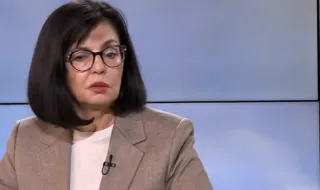
Bulgaria and Romania must act in a coordinated manner and insist on a more categorical European response to the ongoing incidents with drones in the Black Sea. This was stated by former European Commissioner and chief negotiator for Bulgaria's membership in the European Union Meglena Kuneva on the air of “Good morning, Europe“ on Euronews Bulgaria. The reason for her comment was the announcement by the Romanian authorities of downed drones of the “Geran“ type, used by Russia in the war against Ukraine. Kuneva described the rapid clarification of the facts on the Romanian side as a positive step and expressed hope that the Bulgarian authorities would also present clear results. “When the facts are known, this is the basis for a national response and for dispelling any doubts in society“, she emphasized.
According to Kuneva, the diplomatic actions so far of Bulgaria, Romania, the European Union and NATO have not achieved their main goal — to deter new incidents and reduce tension. She noted that the initiatives for a moratorium on attacks and for a peace zone in the Black Sea require specific monitoring mechanisms and guarantees of implementation. As an example of a working approach, the former European Commissioner pointed to the agreement on the export of Ukrainian grain from 2022, negotiated with the mediation of Turkey and the UN, which included a mechanism for joint monitoring. According to her, Bulgaria should insist on joint actions with Romania and the other Black Sea countries. "We must react quickly," Kuneva said, explaining her support for an appeal to the government to guarantee national security.
Kuneva called on the Bulgarian authorities to be open, decisive and consistent in their position towards Russia. She pointed out that the European Union condemns the attacks and makes a connection between them and Russian interests, although public statements take into account the need for evidence. According to her, Bulgaria must synchronize its actions with Romania and not lag behind the reactions of neighboring countries. "Bulgaria must earn trust every day that it not only knows what its interests are, but also that it knows how to defend them step by step and is honest with its own citizens," she stressed. On another current foreign policy issue - the tension between Sofia and Skopje - Kuneva said that more facts and goodwill are needed to find a solution through dialogue.
Commenting on the prospects for the war in Ukraine, Kuneva noted that the international situation is changing and that the outlines of a new world order are increasingly clearly taking shape in the talks between Donald Trump and Vladimir Putin. She described as worrying the fact that European countries have spent significant funds on Russian energy resources, raising the question of whether financial support for Russia through fuel purchases has exceeded aid to Ukraine. In her opinion, Europe should defend its own interests more strongly and not equate the aggressor with the attacked country. Kuneva also expressed concern that in Bulgaria there is more and more talk about protection through NATO than about the role of the European Union. “The question is where is the European Union“, she concluded.
And more:
The Bulgarian economy faces the risk of being cut off from its external markets due to the lack of security for shipping in the Black Sea and the low waters of the Danube River, which make it impossible to use it as a waterway.
An analysis by the Institute for Market Economics shows that 30 million tons of Bulgaria's imports and exports last year were transported by sea, and 4 million tons - by river transport.
The economists' analysis indicates that after the sinking of merchant ships in recent weeks in the Black Sea, insurance premiums have increased significantly, and with this - and the cost of transport.
However, experts see the great danger in the possibility that the attacks will continue and thus endanger shipping to the point that it practically stops.