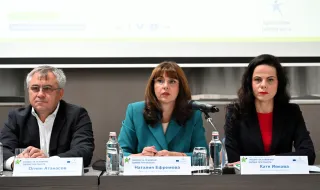
About 45% of workers in the European Union report that they are exposed to psychosocial risks at work. Globally, over 12 billion working days are lost every year due to depression and anxiety related to adverse working conditions. The data of various international institutions was presented by the Minister of Labor and Social Policy Natalia Efremova at the opening of the conference “Prevention of Psychosocial Risks at Work“. It is traditionally organized by the Ministry of Labor and Social Policy as part of the events of the European Week for Safety and Health at Work. This year, the Week is under the title “Together for Mental Health at Work“.
“The data show that psychosocial risks are not only a personal problem of the affected person and his family. They lead to very serious economic and social problems - an increase in work accidents, increased sick leave, reduced productivity and earlier exit from the labor market," commented Minister Efremova.
She drew attention to the fact that human capital is the most important for any economy. "It must be healthy first and foremost and then able to work," said the minister.
According to Natalia Efremova, in the modern world of transformations, extremely rapid digitalization, the introduction of artificial intelligence, remote work and continuous connectivity between people and their employers, psychosocial risks create more and more dangers in the workplace. They negatively affect both people's work capacity and motivation to work.
The most serious risks to mental health affect workers in sectors where there are high demands on them, constant communication and responsibility to other people, such as healthcare, education, social services, industry. “These are the areas in which the consequences of psychosocial risks are most often seen, leading to high levels of tension and chronic stress among employees, if work is not done to prevent them. Therefore, we must not only talk about this problem during the European Week for Safety and Health at Work, but constantly, develop and implement measures that will ultimately help workers feel better at their workplace“, noted Minister Efremova.
She emphasized that in order for the measures to be effective, it is necessary to build trust between employers and employees. “Employees must be able to speak freely at the workplace about what is bothering them. "Very important for the effectiveness of ensuring safety and health at work is social dialogue, as well as all stakeholders acting together," added Minister Natalia Efremova.
The European OSH Week is an initiative of the European Agency for Safety and Health at Work, which is traditionally dedicated to a certain socially significant topic. This year, the events pay attention to mental health at work. The Minister of Health Katya Ivkova also participated in the MLSP conference "Prevention of Psychosocial Risks at Work."