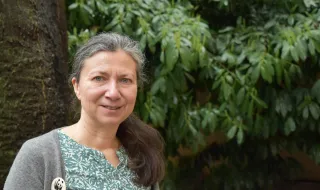
The “Living Planet“ report is the leading scientific publication of the world's largest conservation organization WWF. It was first published in 1998. It was published annually until 2000, and since then - every two years. The latest edition from October 2026 is the 16th in a row. The “Living Planet“ report is a comprehensive study of trends in global biodiversity. What does it show… Vesselina Kavrakova, Head of WWF Bulgaria, speaks to FACTI.
- Ms. Kavarakova, the “Living Planet“ report shows a 73% decline in wild vertebrate populations between 1970 and 2022. How should we understand this indicator and what does it really mean for the state of nature and ecosystems?
- When they hear "73% decline", many people imagine that almost three-quarters of the Earth's wild animals have disappeared. This is not exactly the case. The indicator measures the average change in thousands of observed populations of nearly 6,000 species around the world since 1970. Some of them are declining dramatically, others are stable, and in some, although small, there is even an increase. However, the message is clear: nature is losing resilience. Although some species and populations are recovering thanks to targeted efforts, the overall trend remains negative and losses are a fact. This shows that the pressure on nature continues to exceed its ability to recover.
It is also important to emphasize that this is not just about the fate of wildlife. Healthy ecosystems provide us with clean water, fertile soils, pollination of crops, protection from floods and greater resilience to climate change. When species populations decline, these systems gradually weaken, and this ultimately affects the quality of life and security of people.
That is why the Living Planet Index is so important. It does not measure all of the biodiversity on Earth, but it is one of the best global indicators of the state of nature. And the strongest message of the report is that we can still change this trend. There are many examples around the world that when society, institutions and conservation organizations act together, nature can recover.
- The most dramatic decline is in freshwater animals – 85%, and in Latin America and the Caribbean the decrease in observed populations reaches 95%. What are the main reasons for these huge regional differences?
- Freshwater ecosystems - rivers, lakes and wetlands - are among the places on the planet most severely altered by human activity. There is no single cause, but a combination of many. Pollution, overuse of water, dams, interruption of river flows with barriers and destruction of habitats are leading to a sharp decline in many species. In addition, freshwater ecosystems are dependent on what happens on land around them, and this also contributes to their vulnerability and a high degree of damage. Soil pollution in the lands around rivers and lakes, or logging in river basins are examples of this.
In Latin America and the Caribbean, the pressure is even greater. There, the loss of forests and wetlands, the expansion of agricultural land, the overexploitation of natural resources and climate change are accumulating and leading to the most dramatic declines in observed populations in the world. This is a stark reminder that the fate of species is directly linked to the state of the places where they live. When we lose habitats, we also lose the animals that depend on them.
It is no coincidence that the most affected are precisely the tropical regions, which preserve a huge part of the world's biodiversity. For decades, they have been a source of raw materials, food and other resources for the global economy, while much of the economic benefits of this exploitation do not remain where the natural losses are greatest. At the same time, many of these countries face serious socio-economic challenges and limited institutional capacity to manage and protect natural resources. This creates additional pressure on some of the most life-rich regions on the planet and makes their protection not only an ecological issue, but also a matter of global justice.
- The report reports a 23% decline in Europe and Central Asia, but in Europe and North America the trend is weaker, but the reason is that in 1970, when the study began, biodiversity there was already affected by large-scale negative impacts. At the same time, it points out that serious pressure on nature in Europe began even before 1970. Can we say that Europe has really made progress, or does the lower decline simply reflect losses that have already occurred?
- At first glance, the data for Europe looks more promising compared to other parts of the world. But a smaller decline does not necessarily mean a better state of nature, but often reflects the fact that much of the loss had already occurred before the measurements began. By the time the index starts to take into account changes, European nature has already gone through centuries of intense human intervention and transformation. In Europe, much of the deforestation, drying up of wetlands, fragmentation of rivers and loss of habitats happened much earlier.
At the same time, Europe is also showing something very important: that conservation measures can work. Thanks to protected areas, conservation legislation and targeted recovery programmes, populations of many mammal and bird species are recovering. The European experience therefore carries two important messages. On the one hand, it reminds us how lasting the consequences of nature loss can be. On the other hand, it shows that when there is political will, investment and long-term efforts, recovery is possible.
- Populations of some species, including tiger and bluefin tuna, are recovering thanks to targeted and long-term efforts. What are the most important factors that make the recovery of an endangered species possible?
- Experience from conservation efforts around the world shows that the recovery of an endangered species does not happen by chance and is rarely the result of a single measure. Long-term support, stable funding, effective habitat protection, scientific monitoring and a clear goal around which people, institutions and local communities can unite are needed.
No less important is persistence. Results often appear after decades, but in the meantime political changes, financial difficulties and new challenges arise. Success stories show that the most important condition is that the efforts continue long enough to bear fruit.
It is this combination of a clear goal, a realistic plan and perseverance that the authors of the report call “the science of hope“. Hope is not wishful thinking, but the ability to keep working for change, even when it is not yet in sight.
For tigers, the number of wild animals has increased from about 3,200 in 2010 to an estimated 5,700 in 2025. Atlantic and Pacific bluefin tuna have also recovered from decades of overfishing to the point where they are no longer considered endangered. What these successes have in common is that they have been achieved through long-term, consistent efforts. The people behind them have continued their work even during periods when change has been almost invisible.
- 2030 is just a few years away, and the report says there is no time to waste. Is it realistic for the world to achieve the global goals for nature, climate and sustainable development within this timeframe, and what are the biggest obstacles to this?
- It is realistic to make significant progress by 2030, because we already have the knowledge, technology and tools we need. The problem is not that we do not know what to do, but that we are not doing it fast enough and at the right scale.
Instead of creating new strategies and goals, it is more important today to fulfill the commitments already made to protect nature and limit climate change. The next few years will be crucial.
The biggest challenge is that changes are needed in systems on which the whole of society depends - the way we produce our food, our energy and the way we direct investments. These systems are among the main drivers of biodiversity loss and climate change, and large systems are generally difficult to change.
Nevertheless, there are reasons for optimism. In many places around the world, we are already seeing signs of so-called positive tipping points - moments in which sustainable solutions are starting to develop faster than old models. An example of this is energy, where renewable sources are becoming increasingly accessible and competitive. Similar processes are also beginning to be observed in agriculture, where more and more producers, companies and consumers are looking for more sustainable practices. Therefore, the most important question is no longer whether the solutions exist. They exist. The question is whether we will be able to implement them quickly enough.
- What is the role of governments and businesses in this transformation?
- Governments and businesses have a crucial role to play because they determine what activities are promoted and financed. If we want to stop the loss of nature and limit climate change, we need to change not only individual practices, but also the rules and incentives that entire economic sectors operate under. Governments have powerful tools at their disposal - legislation, tax policy, public procurement and public funding. They can direct investments towards sustainable solutions and gradually phase out support for activities that damage nature.
Business is also a key part of the change. Companies make decisions about how food is produced, how natural resources are used and where funds are invested. Therefore, sustainable business models are no longer just a matter of corporate responsibility, but of long-term competitiveness and sustainability.
Today, however, there is still a huge imbalance. In 2023 alone, about $7.3 trillion was spent worldwide on activities that damage nature, while funds for its protection were about $220 billion - more than 30 times less. So, globally, many times more money is invested in activities that contribute to the destruction of nature than in its protection and restoration. It is precisely changing this direction of financing that is one of the most important prerequisites for achieving the global goals for nature and climate by 2030.
- Is it possible to protect biodiversity without changing the way we produce and consume energy, food and natural resources?
- Protecting biodiversity cannot be achieved on the necessary scale without changing the way we produce our food and energy and use natural resources. The reason is simple - these systems are among the main drivers of nature loss around the world.
Agriculture is the biggest cause of habitat loss and degradation. At the same time, the fossil fuel-based energy system is a major driver of climate change, which is increasingly affecting species and ecosystems around the world.
That is why the report emphasizes that solutions must go hand in hand. We need agriculture that produces food without destroying nature, an energy transition to renewable sources that is carefully planned and protects ecosystems, and a financial system that encourages these changes rather than supporting activities that harm nature.
The good news is that it is not a question of choosing between people and nature. On the contrary, long-term food, energy and economic security depends precisely on preserving the natural systems on which we all depend.
- What do these global trends mean specifically for Bulgaria? Are there areas or ecosystems in our country where processes similar to those described are already being observed?
- Global trends do not bypass Bulgaria. Although the data in the “Living Planet” Report do not represent a national assessment for the country, the main reasons for the loss of biodiversity are the same in our country: loss and fragmentation of habitats, changes in aquatic ecosystems, pollution, excessive use of natural resources and climate change.
From the analyses of WWF Bulgaria, we know that some of the most affected ecosystems are freshwater ones. Rivers and riparian forests are among the most damaged habitats in the country.
There is practically no Bulgarian river that is not affected to some extent by human activity – through adjustments to riverbeds, dams and other barriers, water abstraction, aggregate extraction or pollution.
The consequences are not limited to individual species. When rivers lose their natural character, the benefits they provide us - cleaner water, flood protection, conditions for fishing, agriculture and the livelihood of local communities - also weaken.
At the same time, Bulgaria still preserves natural wealth that has already been lost in many parts of Europe. It is very important not to take this heritage for granted, to protect the remaining natural habitats and to restore where nature has already been damaged.
- There is often talk of a conflict between economic development and nature conservation. Is it believed that this model should be changed, or is it possible for economic growth and nature restoration to go hand in hand?
- It is becoming increasingly clear that the opposition between economic development and nature conservation is wrong.
The economy does not exist separately from nature, but depends on it.
Food, water, raw materials, fertile soils, crop pollination and even a stable climate are natural resources and processes without which economic activity could not function.
The data shows how strong this dependence is. According to a 2023 PwC analysis, about half of the world’s GDP is directly or indirectly dependent on nature. This means that biodiversity loss is not only an environmental problem, but also an economic risk.
The question today is therefore not whether to choose between the economy and nature. The real question is how to develop the economy in a way that preserves the natural systems on which it depends. Economic growth that leads to the depletion of natural capital may bring short-term benefits, but in the long term undermines its own foundations. If we want long-term prosperity, we cannot view nature as an obstacle to development. It is one of the main prerequisites for it.
- What concrete actions would you indicate that governments, business and society can take in the coming year to reverse the negative trend?
- Governments have a particularly important role to play in the coming year. On the one hand, they must use international cooperation formats, such as meetings on global climate and biodiversity agreements, to maintain ambition and accelerate the implementation of commitments already made. On the other hand, real success will be measured not by new promises, but by concrete solutions and policies implemented at home. Governments can accelerate the transition to clean energy, stop incentivizing activities that damage nature, invest in restoring ecosystems and put nature conservation at the center of development policies.
Business can assess their dependence on natural resources, reduce their environmental impact and direct more investment towards sustainable solutions. More and more companies are realizing that a healthy economy cannot exist without a healthy natural environment.
Each of us has a role to play. As citizens, we can demand more responsible decisions from institutions and businesses, support sustainable producers, and participate in decisions that affect nature in our communities.
The most important thing is that these efforts should not be seen in isolation. Neither governments, nor businesses, nor citizens can turn the tide on their own. Real change comes when everyone acts in the same direction.
This year’s Living Planet Report is about hope. Not hope as a wish that everything will get better by itself, but as a confidence that our actions can change the outcome. We already know what we need to do. The question is whether we will do it quickly enough and consistently enough.