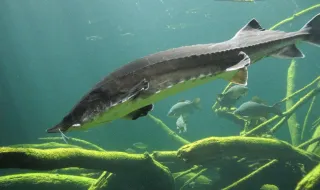
Despite a permanent fishing ban in the Black Sea and Danube countries, sturgeon continue to be the victim of poaching and illegal trade in Europe. This is shown by a WWF report that analyzes official data from Bulgaria, Romania and Ukraine for the period 2016-2025. Sturgeon fish are among the most endangered groups of animals in the world, and the Lower Danube is home to some of the last wild populations of the group.
According to the analysis, at least 3,366 sturgeon were affected by documented wildlife crimes in the Lower Danube region between 2016 and 2025. For the tenth consecutive year, WWF has been collecting and analyzing information from the three countries that are key to the survival of the last wild sturgeon populations in the Lower Danube. The report “In the Poachers' Web: Ten Years of Documented Wildlife Crime Targeting Sturgeons in the Lower Danube Region (2016-2025)“ was produced as part of the DANUBElifelines project, which aims to protect migratory fish and their habitats in the Danube River Basin and beyond. It is the most comprehensive assessment to date of the scale of poaching and illegal trade in sturgeons in the region.
“Illegal fishing and trafficking continue to pose a serious threat to the recovery of Danube sturgeons. Every fish lost to poaching is a step backwards for populations already on the brink of extinction. Strong control and cross-border cooperation are crucial for their survival,” commented Beate Striebel, Head of WWF’s Sturgeon Initiative.
509 cases in ten years
The report documents 509 confirmed cases involving sturgeon or prohibited fishing gear between 2016 and 2025. Of these, 235 were in Romania, 175 in Bulgaria and 99 in Ukraine.
WWF stresses that the number of registered cases should not be seen as a direct indicator of the scale of poaching. It depends on the effectiveness of control, the way in which reporting is carried out and the access of institutions to the areas concerned.
The decrease in registered cases in Ukraine also does not necessarily mean a decrease in illegal activity. Russia’s war against Ukraine has restricted access to important fishing grounds and made control difficult in parts of the Danube Delta and along the Black Sea coast.
The report confirms that the four remaining native sturgeon species in the Danube continue to be affected: rudd, trout, Russian sturgeon and blue sturgeon. Among the confiscated specimens are blue sturgeons over two meters long and weighing up to 200 kg.
Over a decade, authorities have confiscated a total of at least 263 kg of illegal caviar and about 6.5 tons of sturgeon meat and whole fish, as well as large quantities of banned fishing gear.
Bulgaria: 1,250 illegal sturgeons and about 54,000 hooks
One of the most worrying findings in the report concerns Bulgaria. Over the past ten years, authorities have seized 1,250 illegal fishing nets used to catch sturgeon.
This banned fishing method is particularly cruel. It uses long lines with multiple large hooks that hang the fish on their bodies, rather than catching them when they bite the bait. As a result, the fish often suffer serious injuries and can struggle for survival for hours or even days.
The confiscated equipment totaled over 45 km in length and approximately 54,000 hooks. At the same time, only 25 sturgeon were officially confiscated in Bulgaria over the entire ten-year period.
According to WWF, this large difference does not mean low levels of poaching, but indicates the need for further analysis of control and reporting systems.
The report also identifies areas where illegal activities coincide with key sturgeon habitats. These include the Vratsa region in Bulgaria, Tulcea county in Romania and Odessa region in Ukraine.
Last wild sturgeons need stronger protection
Despite decades of legal protection and fishing bans in the Lower Danube and the Black Sea, poaching and illegal trade continue to threaten the recovery of these ancient fish.
WWF calls for stronger cross-border cooperation, better information exchange between institutions, effective monitoring and reporting, more decisive action against wildlife crime and continued investment in the protection of the last wild sturgeon populations.