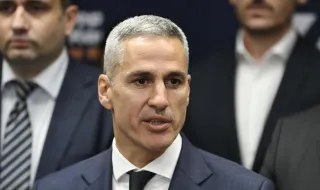
Andrey Gyurov accused the ruling parties of showing, just days after the elections, a discrepancy between their pre-election statements and the actions of those in power. In a Facebook post, he pointed to the 32.52% increase in the price of natural gas and the dispute over the possible redirection of part of the contributions for the second pension pillar to the National Social Security Institute.
“Two days after the elections. That was all it took to see the difference between what those in power claimed before the vote and what is happening after it,” Gyurov wrote.
Gas prices rose by 32.52%
On November 2, the Energy and Water Regulatory Commission approved a natural gas price for November that was 32.52% higher than in October. The decision applies retroactively from November 1. The price is €58.43 per megawatt-hour, excluding access and transmission fees, excise duty and VAT. Bulgargaz’s initial application envisaged a 34% increase.
The EWRC said that the additional use of quantities from the Chiren gas storage facility had limited the rise. The regulator also stated that the increase in the cost of the raw material would not change electricity and heating prices for household consumers until July 1, 2027. However, the higher price increases the costs of businesses and heating companies that use natural gas.
Gyurov recalled that before the vote, claims of a 34% increase had been dismissed as an insinuation. According to him, more expensive gas could also affect the prices of goods and services through higher production costs.
The dispute over the second pension
In his post, Gyurov also commented on reports that the government was considering halving the contribution to the second pension pillar, with 2.5 percentage points of the current 5% being redirected to the National Social Security Institute.
The Ministry of Finance denied the claims and described them as disinformation. The ministry said it was not preparing such a reform. Representatives of the ruling majority also rejected the information.
At the same time, representatives of Democratic Bulgaria said they had a document from internal communication with the European Commission discussing changes to the second pension pillar. According to Ivaylo Mirchev, the document shows that such an idea had been presented to the European Commission and had not received support. The claim about the document’s contents comes from the opposition, while the full correspondence between the Bulgarian institutions and the EC has not been made public.
“The elections are over. But no one has been given the right to govern without scrutiny. And no one is stronger than the Bulgarian citizens,” Gyurov said.
The expected presentation of the draft budget for 2027 should show whether it includes a change in the amount and distribution of contributions to the second pension pillar.