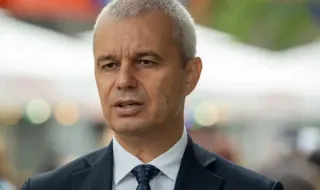
“Vazrazhdane” will support candidates for the new Supreme Judicial Council who are not part of the GERB and DPS quota. The party will not take part in the election of a council that includes representatives of the two formations, its leader Kostadin Kostadinov said in an interview with BNT.
“We will support candidates who are not part of the GERB and DPS quota, and we will not take part in the election of a Supreme Judicial Council with representatives of GERB and DPS,” Kostadinov said. According to him, Vazrazhdane has maintained this position since 2021.
The vote for the parliamentary quota is on November 19
The vote for the new composition of the SJC from the parliamentary quota is scheduled for November 19. The National Assembly must elect each member separately, with a majority of at least 160 votes. Hearings for the candidates are continuing in the Legal Affairs Committee, with the nominations for the Prosecutors’ College presented on November 5.
The term of the current SJC has expired, and the council’s powers are limited. This is blocking decisions related to competitions for career advancement and the initial appointment of magistrates, BNT reported in a piece on the hearings in the Legal Affairs Committee.
Kostadinov singled out Tsveta Rangelova as the candidate whose presentation, in his view, had been the strongest so far. He nevertheless qualified his assessment by saying that in such elections, professional qualifications are not always decisive.
The leader of Vazrazhdane denied that the support of the party’s voters for Iliana Iotova had been part of a political deal or tied to support for a candidate in the SJC election.
Dispute over bilingual signs
In the interview, Kostadinov also commented on the bill on the Bulgarian language, which has passed its first reading. According to him, the provisions restrict the use of duplicate signs in a foreign language in public spaces, including on public buildings.
He drew a distinction between transliteration, which is used for personal names, geographical names, streets and squares, and writing Bulgarian words in Latin letters, which he described as “shlyokavitsa.”
Kostadinov cited as an example the signs in English on the buildings of the Bulgarian National Television and the National Assembly. According to him, the proposal is not directed only against the English language, but against duplicating signs in public spaces. He clarified that exceptions are provided for commercial and tourist sites when a foreign language is necessary to serve visitors.