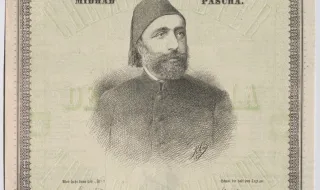
On November 7, 1866, the governor of the Danube Vilayet, Midhat Pasha, travelled by train from Ruse to Varna and declared the line open. The date is according to the New Style calendar, while according to the Old Style calendar the event was observed on October 26. Thus, the Ruse–Varna line became the first railway line in what is now Bulgarian territory and marked the beginning of railway development in Bulgaria.
The route was approximately 223–225 kilometres long and connected the Danube with the Black Sea. The journey between the two cities took approximately eight hours—a period of time that in the 19th century meant a drastic reduction in overland travel time. The stations along the line maintained communication via telegraph apparatus, while traffic was controlled by a system combining railway and telegraph transport.
Construction began two years earlier
The first sod was turned on May 21, 1864, in Ruse. Construction began simultaneously from Ruse and Varna, with more than 15,000 Bulgarians taking part. For many of them, the work was angaria—compulsory and unpaid physical labour under harsh conditions.
The Ottoman Empire commissioned the British Ruse–Varna Railway Company, associated with William Gladstone and the Berkeley brothers, to build the line. The company received a concession for its construction and operation for a period of 99 years. The project initially envisaged the route passing through Shumen, but the engineer Henry Berkeley changed it in the direction of Kaspichan.
The line was opened after a period of delays and while the organisation of traffic was still imperfect. Historical sources differ on its exact length—approximately 223, 224 or 225 kilometres—as a result of the way the route was measured and the different stages of its construction.
From concession to state railway
After the first years of operation, management of the line was transferred to the company of the German industrialist Baron Moritz von Hirsch. It was associated with the development of the network of the Eastern Railway, which served the European territories of the Ottoman Empire.
After the Liberation, the question of ownership remained part of the international obligations of the Principality of Bulgaria. The Treaty of Berlin of 1878 established the framework for settling railway rights and financial obligations, while negotiations with the British concessionaire continued for years.
On August 10, 1888, Bulgaria acquired the line and began operating it as a state railway. The sum is cited in different sources as being between 50 million and 52.8 million gold leva, with the latter figure including related payments and interest. This was more than the principality’s annual budget, which in the same year amounted to approximately 49 million gold leva. The deal was financed through the first state loan from the United Kingdom.
“The construction of railways by private individuals or companies is always a speculative enterprise,” Petko Karavelov declared during the discussion of the Railway Act in 1885.After the acquisition of the Ruse–Varna line and the Tsaribrod–Sofia–Belovo railway section in August 1888, the Bulgarian State Railways were established. Thus, the first railway in the Bulgarian lands also became the foundation of the national railway system.
Sources: bta.bg, bntnews.bg, narodnodelo.bg