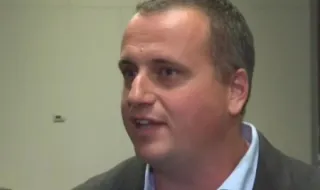
“Freedom is something we must defend every day and fight for at every moment,” said historian, writer and teacher Alexander Stoyanov on bTV’s “120 Minutes.” He was chosen as “Enlightener of the Year” by the audience.
In the interview, Stoyanov described history not only as a story about the past, but also as a means of understanding the present and making better decisions for the future. As an example, he pointed to the work of Paisius of Hilendar and Sophronius of Vratsa, whom he described as among the first Bulgarian enlighteners.
The uncomfortable pages are also part of history
According to Stoyanov, the past must not be rewritten or cleansed of events that cause discomfort and shame. Lost wars, periods of foreign rule and totalitarian government are part of Bulgaria’s historical experience and must not be erased.
The historian stressed that failures can be just as important a source of knowledge as successes. He gave the example of schools of Western historiography that study economic processes through company bankruptcies, rather than only through successful deals.
“It is important to live through them and move forward,” Alexander Stoyanov commented.Crises as part of historical development
Stoyanov drew a parallel between crises in the past and contemporary political and social upheavals. In his words, every social system goes through periods of rise and decline, and even the most successful models are not eternal.
He pointed to the uprising of Asen and Peter at the end of the 12th century, which led to the restoration of the Bulgarian state against the backdrop of the deepening crisis in the Byzantine Empire. As another example, he recalled the political turmoil in Bulgaria during the 8th century and the subsequent rise under Khan Krum.
“There is no way to avoid passing through some kind of purgatory before reaching paradise,” the historian said.
Democracy cannot be taken for granted
According to Stoyanov, the modern world is changing much faster than previous historical eras. Processes that once unfolded over decades or centuries can now develop over months or even weeks.
He believes that the first half of the 21st century is associated with overcoming the inertia accumulated at the end of the 20th century. After the collapse of the Soviet Union, he said, the deceptive feeling emerged that democracy had achieved a final victory and no longer needed to be defended.
The historian warned that if people who want freedom stop fighting for it, those who do not want it will gain the advantage. In his view, building a fairer world requires taking responsibility every day.
Source: btvnovinite.bg