On November 11, 1875, Bulgarian revolutionary émigrés in Giurgiu established a committee that took charge of preparing a new uprising in the Bulgarian lands. The organization went down in history as the Giurgiu Revolutionary Committee and emerged as the successor to the Bulgarian Revolutionary Central Committee in Bucharest, which had disintegrated after the failure of the Stara Zagora Uprising earlier that year.
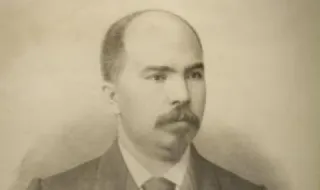
Among its founders were Nikola Obretenov, Stoyan Zaimov, Panayot Volov, Georgi Ikonomov and Georgi Izmirliev – Makedoncheto. Other figures from the revolutionary émigré community also took part in its work. The meetings were held under the chairmanship of Stefan Stambolov and continued until December 25, 1875.
The plan for the uprising
The committee’s main task was to draw up a plan for an organized uprising in the spring of 1876. Initially, May 1 was set as the date. According to Radio Bulgaria, historians view the Giurgiu decisions as an attempt to prepare a nationwide uprising amid the deepening Eastern Crisis.
The plan called for the Bulgarian lands to be divided into revolutionary districts led by chief apostles and their assistants. Bulgarian historical accounts most often identify five districts: Tarnovo, Sliven, Vratsa, Plovdiv and Sofia. Some scholarly overviews refer to four active districts, since the Sofia district failed to carry out any real preparations.
The first, the Tarnovo District, was entrusted to Stefan Stambolov. The Sliven District was headed by Ilarion Dragostinov, the Vratsa District by Stoyan Zaimov, while the Plovdiv District, whose center was Panagyurishte, was initially led by Panayot Volov and later by Georgi Benkovski. The fifth, the Sofia District, remained without any significant organizational activity.
The apostles enter Bulgaria
After the meetings ended, the designated apostles and their assistants crossed into Bulgaria. They began restoring the committee network, recruiting supporters, collecting weapons and preparing the population for armed action.
With their dispatch, the Giurgiu Revolutionary Committee dissolved itself. Preparations continued locally, however, and led to the premature outbreak of the April Uprising – on April 20, 1876, in Koprivshtitsa. Despite its defeat, the uprising drew the attention of the European powers to the Bulgarian question and became a turning point in the national liberation movement.
Sources: bta.bg, old-news.bnr.bg