“The repair of the bridge over the Maritsa River in Pazardzhik Municipality will begin within the next two to three months. Due to political negligence, there is still no approved project, but it has been ready for the past several months and is now at the final stage before a construction permit is issued. The work will be completed within a year to a year and a half.” This was said by the Minister of Regional Development and Public Works, architect Ivan Shishkov, speaking to journalists after a meeting with Pazardzhik Regional Governor Borislav Bogoslovov, Pazardzhik Mayor Petar Kulenski, mayors from the region and members of parliament as part of the “Regions Speak” initiative. Talks have been held with the mayor of Pazardzhik, the chief architect, and the leadership of the Traffic Police in Pazardzhik, and an agreement has been reached on the temporary traffic organization to be introduced during the construction works. “Something that has not been discussed for two years,” the regional minister clarified. It became clear at the meeting that a temporary roundabout would be built on one side, at the expense of the construction project. On the other side of the city, if the municipality wishes, it may build and finance a roundabout at its own expense. Pazardzhik’s mayor has undertaken to provide clarity during the following week on whether this option for the temporary traffic organization will be pursued or whether the existing road network will remain, with the traffic organization being changed. The issue is expected to be finally resolved within the next two weeks. Construction of the project can then begin. Minister Shishkov clarified that he had requested the Road Infrastructure Agency to provide the project as quickly as possible. “There are also beams at the foot of the bridge. You can see what kind of negligence we are talking about. The past few years have been a political standstill, which has ended, but we are all paying for the damage,” he added.
The minister said he expected the selected contractor to begin “bargaining and negotiations”, since the contract had been signed two years ago. “We will investigate who is responsible for the delay, because it is partly the contracting authority’s fault, but the contractor also bears some responsibility. The contract is an engineering, procurement and construction contract, and ‘since the contractor has been delayed, we will not be as generous as previous governments, when contracts were easily amended and funding was increased,’” Shishkov stressed.
The regional minister said the state must provide a legal opportunity to implement the initiatives of mayors and enable people to develop their regions through tourism, because until now the development of ski tourism in Bulgaria has been based solely on circumventing the law. “That is why such a law will be created—one that protects nature and provides clear rules. For 15 years, the political leadership failed to bring out the best in each region,” Minister Shishkov said. He gave the example of Velingrad, where there had been water problems for years, which meant that the necessary planning had not been carried out. Architect Shishkov stressed that this was precisely why he was holding meetings under the Ministry of Regional Development and Public Works’ “Regions Speak” initiative in all regions with members of parliament, regional governors and local authorities—to make the most of each region, because the potential is enormous and must be developed. He gave as an example an idea discussed during today’s meeting for a ski area in Pazardzhik Region, which, in addition to mountains, also has mineral water, lowlands and other natural assets.
Ivan Shishkov expressed the opinion that the budget was balanced, but in order to create opportunities for more investment, including in infrastructure, in the coming years, more must be made of the potential of individual regions, which would stimulate economic development.
“Within the month of November, we believe we will be able to pay all outstanding amounts and sign the new agreements under the Investment Programme for Municipal Projects, which the mayors are expecting,” the regional minister said. He added that the purpose of the funding was to improve people’s quality of life.
In response to a question, the minister said that repairs to the road through the Arabakonak Pass, which will be used as a detour during the repair of the “Topli Dol” Tunnel on the Hemus Motorway, had been under way since the beginning of the month and would be completed within 20 days of the start of work, with construction currently progressing actively. The agreement with the municipalities of Botevgrad and Gorna Malina, as the owners of the route, was signed on November 1 because the consent of their municipal councils had been required. Therefore, the contractor had not been able to start work earlier. He stressed that the tunnel had to be brought into a safe condition and therefore could not be left for another winter without the repairs being completed.
Regarding the Yundola–Razlog road affected by a landslide, the regional minister said that the project would determine the deadlines. In such an emergency, we must have a clear project so that we can reinforce the road, because the technical solutions are the most important thing and safety comes before everything else.
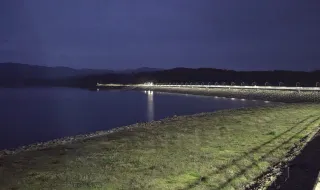
The case of the “Luda Yana” Dam was also a focus of today’s talks. Pazardzhik is the only region that has a dam which is, in practice, not being used, architect Shishkov said, explaining that the necessary network had not been designed to connect the facility with the settlements it was supposed to supply with water. Therefore, funds have been earmarked in the 2027 budget for design studies to show which settlements it can serve. He was adamant that there was no point in building such a huge investment, which had gone only into the pockets of certain construction companies, when there was no readiness of the main water pipelines. He added that the connections to the settlements would now be designed and built, while the mayors of those settlements also had projects for their water supply networks.
During his visit to Pazardzhik Region today, Minister Shishkov familiarized himself with the problems concerning the operation of the “Luda Yana” Dam and the drinking water treatment plant serving it.