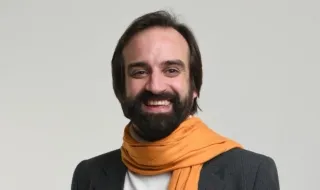
France is facing a profound crisis of public order, social trust and political representation. Behind the images of burning cars, clashes with the police and acts of vandalism, however, lie decades of accumulated discontent, social inequality and unfulfilled promises by the state. But are the riots an isolated phenomenon, or are they part of a recurring pattern? Speaking to FAKTI is Julien Arnoult, a PhD in political science and a long-standing observer of the electoral process in Bulgaria.
- Mr Arnoult, to understand what is happening in France today, do we need to look beyond the images of burning cars and clashes with the police? What are the deep-rooted causes of these riots?
- There are several types of movements: demonstrations, riots, and insurrection. At times, these movements overlap, as it has been the case over the last few weeks. It is necessary to examine them one by one.
The first type consists of demonstrations, serving as an expression of needs. There is, for instance, the movement among high school students, which focuses on improving material study conditions and the quality of education, as well as challenging the system for guiding and assigning students to higher education—a process widely perceived as profoundly inequitable and unjust. Then there is the protest against the "high cost of living" and inflation—or, to put it another way, a protest against inadequate wages. These are fundamental issues that have remained without economic or political solution—in some cases for over forty years, as is the case with the "high cost of living" (which was already a key theme in the 1981 presidential election). Demonstrations are typically organized or overseen by established groups, such as labor unions, associations, or political parties. Even when they emerge independently—as was the case with the "Yellow Vests" (*gilets jaunes*) movement starting in 2018—they quickly become organized and designate their own representatives.
The second type consists of riots—spontaneous outbursts of violence, usually triggered by a specific political event or a particular incident. Such riots have recurred in France for the past fifty years and are distinct from the specific demands voiced during demonstrations. This phenomenon was depicted in the 1995 film *La Haine*, directed by Mathieu Kassovitz—a work that won an award at the Cannes Film Festival that same year. This underscores the extent to which riots have become a social phenomenon characteristic of French culture.
The third type—a growing phenomenon, though not unprecedented in contemporary political history— consists of insurrection: a violent movement aimed at challenging authority or even overthrowing those in power. It is carried out by groups and individuals belonging to the radical left. They target public institutions—such as buildings, evidenced by the arson attack on the Limoges town hall—as well as individuals who represent the established order, including firefighters. They also lash out at symbols of capitalism and luxury.
- What triggered the latest wave of violence, and what social and political tensions have been building up over the years?
- France has been a society marked by political violence since at least 1789 and the French Revolution. The list of such waves of violence is so long that enumerating them would be tedious. There is a constant, volatile atmosphere—like gas in the air—that the slightest spark can ignite without warning. Édouard Philippe, during his time as Prime Minister (2017–2020), was aware of this even before the "Yellow Vests" (*gilets jaunes*) crisis erupted in 2018.
Political and social tensions emerge when a protest movement arises but goes unheeded by those in power—with no prospect of a solution in sight. A movement among high school students began even before the start of the school year in Mayotte (a French overseas department located in the Mozambique Channel), before spreading across mainland France by mid-September. Yet, it was not until the final week of October that the Minister of National Education finally agreed to meet with representatives of the high school student organizations! When the political leadership takes so long to respond, it is hardly surprising that tensions arise and subsequently escalate. This type of behavior is a classic, recurring pattern in France.
As for rioters and delinquents, they seize upon political and social demonstrations as an opportunity to sow disorder—or even chaos. The same phenomenon occurs during celebrations—or events intended to be celebratory—such as the aftermath of Paris Saint-Germain’s second Champions League victory in May 2026, which saw shops smashed, cars set ablaze, street furniture burned, looting, and more.
- A large proportion of the unrest in France involves young people from disadvantaged urban neighbourhoods. Why are these areas particularly vulnerable to recurring waves of violence?
- This question posits that there is a link between poverty and political violence. However, no such link has been proven. Without being able to establish a specific ratio, those who carried out the acts of violence, vandalism, and destruction in October 2026 came from both impoverished suburbs and affluent city centers.
On the other hand, there is a long-standing pattern of violent protest in the poor, outlying municipalities of large urban areas. This began in Vaulx-en-Velin, a suburb of Lyon, in 1979. In 1988, cars were set on fire in Strasbourg on New Year’s Eve. Since then, this phenomenon has occurred every year throughout France.
In June and July 2023, riots broke out over the course of eight days following the death of 17-year-old Nahel Merzouk, who was killed by a police officer. The violence, destruction, and looting even extended to rural France. Consequently, the violence seen in France is not exclusive to the poor, outlying neighborhoods of large urban areas.
- How significant a role does social inequality play in the anger we are witnessing in France? Is the divide widening between those who feel they are part of the economic and political system and those who feel abandoned by it?
- Social inequality has been a central theme in French public life since the French Revolution—from the Third Estate of the *Ancien Régime* establishing itself as the sole representative of the nation (by seceding and excluding the clergy and the nobility) to the establishment of citizenship, which rendered everyone equal under the law, the abolition of privileges, and so on.
The issue of exclusion is complex, involving both an economic and social reality on one hand, and a matter of perception on the other—all within a society characterized by extensive state redistribution and high levels of taxation and social levies. The gap between these two aspects is one of the drivers of public anger.
Furthermore, there are the various implicit promises left unfulfilled by society—promises that affect nearly every social group and which public authorities seem unable to address. The youth unemployment rate (for those aged 15–24) stood at 21.6% in the second quarter of 2026. Holding a higher education degree no longer guarantees employment—a reality that now even affects graduates from the most prestigious institutions. The middle class faces structural difficulties in finding affordable housing in large urban areas. Wages remain low; in 2023, the median net monthly salary for a full-time equivalent position was 2,180 euros in the private sector and 2,380 euros in the public sector. There is also a phenomenon of emigration—a topic that receives far less attention than immigration. Additionally, there is a growing shortage of healthcare personnel and a decline in the quality of health services—all in a country that has long convinced itself it possesses the best system in the world. The list could go on.
On the other hand, the interpretation of "abandonment" cannot be applied entirely to the political sphere. During the 2024 snap legislative elections, the abstention rate stood at 33%—the lowest level since the 1997 elections—compared to 57% in the second round of the 2017 legislative elections. The National Assembly elected in 2024 comprises 11 parliamentary groups (a record for the start of a legislative term), which reflect both the diversity of the French people’s political expression and the depth of their divisions.
- Many of the young people involved in the unrest were born in France, speak French as their first language and have never lived in another country. Yet some of them clearly do not feel fully part of French society. How did France reach a point where a section of an entire generation feels alienated from the country in which it grew up?
- I believe that to understand the integration of immigrants and their children, we must re-examine how the French nation was constructed by the State. Furthermore, we must abandon the illusion of a quest for a monolithic collective identity and instead collectively acknowledge the plurality of individual identities.
France was once a land of linguistic and cultural diversity, where the population was subjected to a process of standardization driven by a dual pressure: that of society and that of the State. By imposing uniform rules for everyone—beginning with the French Revolution (yet again!)—and by establishing free, compulsory public schooling in 1881–1882, the State forged the "French people"—a civic, rather than an ethno-cultural, nation. Over the decades, this process shaped both the native-born population and immigrants alike. This success story serves as the foundation for the myth of integration and assimilation— concept that echoe the myth of inclusion through citizenship during the era of the Roman Empire. Such a phenomenon, which resulted in the eradication of cultures and identities, would no longer be possible in today’s world, given the constitutional spread of the rule of law.
Until the Second World War, immigrants and their children had no choice but to integrate, to renounce their original identities, because they knew, or were convinced in most cases, that their departure was a one-way trip. For refugees fleeing political, ethnic, cultural, or religious repression, this was a given. This holds true for all emigrants, regardless of their destination.
However, the old approach no longer works. The identity of their country of origin remains with immigrants and their children thanks to the development of transportation, its affordability, and communication technologies. A second- or third-generation child of immigrants will have the opportunity to meet their family who remained in their country of origin during holidays, for example.
Above all, it must be understood and acknowledged that original identities do not disappear. Indigenous regional identities are being revived or highlighted, while immigrant identities endure. Consider the example of sports, often regarded as an effective arena for integration. In Santiago, the capital of Chile, there is a football club—Club Deportivo Palestino—that competes in the first division. It was founded in 1920 by Palestinian immigrants, most of whom were Christian. The club adopts the colors of Palestine and stands in solidarity with the Palestinian people in their conflict with Israel. Yet, Palestinian immigration to Chile began in the 1880s—a time when there were no airplanes for visiting family back home during the holidays, nor WhatsApp for calling loved ones. The Palestinian identity of these Chileans remains an integral part of who they are, to varying degrees.
- Why are young people so often at the centre of these outbursts of anger? Do they see no future for themselves, or do they feel oppressed by the state system?
- The French Republic includes the value of equality in its national motto. Yet, to paraphrase George Orwell’s *Animal Farm*, while all citizens in France are equal, some are "more equal" than others. In other words, public services—both in terms of quality and quantity—are more limited in suburbs and rural areas. The national education system reflects these disparities, even though it is the very institution historically tasked by society with reducing inequality. In reality, shortages of teachers and support staff (such as hall monitors) disproportionately affect schools located in these areas. This disparity is both visible and tangible. During the 2002 presidential election, Jean Saint-Josse, leader of the hunters' party, put it this way: he was willing to pay taxes—taxes that would fund the upkeep of the Opéra de la Bastille in Paris—but he also expected those same taxes to keep post offices opened (along with their associated services, including banking) in rural villages. A quarter of a century later, that gap has only widened.
- Are we witnessing a crisis of public order in France, or a deeper crisis of trust between the state and certain sections of society? How can this cycle of confrontation be broken?
- The crisis of authority and public order is glaringly obvious!
Above all, we must move beyond a culture of political and social confrontation. We lack intermediate organizations to bridge the gap between citizens and the State. We also need to shift toward a horizontal exercise of power—that is, a parliamentary approach—moving away from an excessive, vertical/presidential style of governance (in France, the term "monarchical" is even used), which was particularly evident during the presidential terms of Nicolas Sarkozy (2007–2012) and Emmanuel Macron (2017–2027).
With the emergence of a politically fragmented National Assembly and minority governments since the 2022 legislative elections, our elected officials should, by necessity, be pursuing a path of dialogue and cooperation—as is the norm in all parliamentary systems. Clearly, we have not yet reached this initial level of political maturity. Yet, in such a configuration, all political forces are accountable for the success or failure of dialogue.
Nevertheless, spaces for dialogue do still exist in France—for instance, between labor unions and employers' organizations. Consider this example: within our social protection system, executive-level employees are entitled to a mandatory benefit provided by their employer: a protection insurance policy. For non-executive employees, this benefit is optional; yet, 91% of such employees receive it, thanks to national collective bargaining agreements. This serves as clear proof that it is indeed possible to engage in dialogue and reach agreements without resorting to confrontation.
- We are seeing social tensions and riots in France spread to other European countries. Is this hostility towards a state that people feel has abandoned them contagious?
- While the same causes can produce similar effects, attempting to link these various social tensions strikes me as artificial. They stem from local dynamics, between which one can, at best, draw parallels. To establish a genuine connection, there would need to be a cause that affects and transcends individuals and groups, as well as social and national spaces. That is not the case here.
------------------------------------
Julien Arnoult holds a PhD in political science from Paris Panthéon-Assas University. He is knight of the order of academic palms in France. He is also an expert to the European Commission. Julien Arnoult thought political science and public and was associate justice representing the Council of State (French administrative supreme court) at the National court for asylum seekers.
Link to main version
Nov 10, 2026 09:00 51
Dr Julien Arnoult to FAKTI: In France, all citizens are equal, but some are “more equal than others”
The old model of integration and assimilation no longer works, he says
Снимка: Личен архив