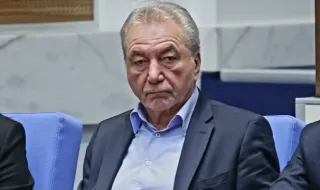
The development of Bulgarian agricultural production and the promotion of cooperation in the sector will strengthen producers’ positions on the food market and create conditions for its sustainable development. This was stated by the chairperson of the Commission for Protection of Competition, Assoc. Prof. Rosen Karadimov, during the public discussion of the guidelines for cooperation in the agricultural sector and the practical guide thereto.
The Commission for Protection of Competition developed the documents as part of the sector analysis of the market for essential food products. The guidelines explain the opportunities provided by European legislation for cooperation and coordination among agricultural producers while complying with competition rules.
The aim is to support their efforts to pool resources, reduce costs, better organize production and the marketing of produce, and strengthen their positions in negotiations with major buyers.
The guidelines present the applicable European rules and special regimes that permit certain forms of cooperation in the agricultural sector. The document also explains the restrictions that ensure cooperation will not be used to conceal anti-competitive agreements and practices.
“The Commission’s initiative is linked to legislative efforts to accelerate the process of cooperation in agriculture. The aim is for Bulgarian cooperatives to become stronger and more competitive, while relations between them and the other market participants remain within the framework of European competition rules,” Karadimov stressed.
According to him, proceedings concerning prohibited agreements are monitored not only by the CPC but also by the European Commission. The guidelines also explain the restrictions that ensure cooperation will not be used to conceal anti-competitive agreements and practices.
Deputy Prime Minister and Minister of Economy, Investments and Industry Aleksandar Pulev said that competitive Bulgarian production must be built with more opportunities for domestic farms in order to increase the presence of quality Bulgarian products on the market. “Through the Bulgarian Development Bank, the Ministry of Economy is developing financial instruments focused on young agricultural producers, specialized products for small farms and cooperatives, by financing producer associations and shortening supply chains,” he said, welcoming the CPC’s initiative to promote cooperation among agricultural producers.
Speaking to journalists, Assoc. Prof. Karadimov also commented on the fines imposed by the Commission on “Kaufland” for established unfair trading practices against Bulgarian producers of food products. “The CPC applies the law equally to all companies, regardless of their scale, and will not compromise with individual market participants,” he said.
The CPC chairperson stressed that the decision was the result of a consistent and intensive investigation of the sector, which began a year and a half ago with the sector analysis of the food market. In December 2025, the CPC publicly presented the interim report from the sector inquiry, which revealed serious structural problems in the sector.
“Even then, we found that the producer was in a very weak position while the retailer held a dominant position. We called for dialogue and self-regulation. We warned that we would monitor the sector and that we are not an authority that imposes sanctions for their own sake. We waited six months for the retail chains to bring their contractual relations into compliance with the law. For another five months, we collected information and carried out analyses. The decision is based on a year and a half of analysis,” Karadimov stressed.
He clarified that, when determining sanctions, the Commission applies the rules established by law, and that in Kaufland’s case the sanctions are well below the maximum provided for by law—up to 10% of the company’s total turnover for the previous financial year. In this particular case, the three sanctions represent 1.58%, 2.2% and 1.58% of the chain’s total turnover for 2025.
The public discussion was also attended by Deputy Minister of Agriculture and Food Yanislav Yanchev, Yavor Gechev, chairperson of the Parliamentary Committee on Agriculture, Food and Forestry, as well as deputy chairs Todor Dzhikov and Lyuben Ivanov, Maya Manolova, chairperson of the Commission for Consumer Protection, the leadership of the State Commission on Commodity Exchanges and Wholesale Markets, Deputy Ombudsman Maria Filipova, and representatives of the National Revenue Agency, producers, processors, retailers and consumers.