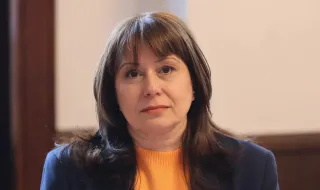
The problem with „Toplofikatsia Sofia“ cannot be solved by Sofia Municipality and the local parliament alone. Ombudsman Velislava Delcheva called for a joint solution involving the state, the National Assembly, the government, Sofia Municipality, the company and the Bulgarian Energy Holding in an interview with NOVA.
The reason for her position was the latest hearing at the Sofia Municipal Council. According to Delcheva, it once again failed to provide answers to citizens’ questions. It is still unclear when repairs to the district heating network will be completed, while the company’s financial condition does not allow it to be fully modernized.
„This is a national problem. It must be solved not merely by the local parliament, but at national level and once and for all,“ the ombudsman said. In her words, „Toplofikatsia“ has fallen into a vicious circle – it has enormous debts while simultaneously losing customers who are dissatisfied with the service and are looking for a way to disconnect from it.
The company also has a social function
Delcheva stressed that „Toplofikatsia Sofia“ cannot simply be shut down because it also performs a social function. In her view, the state must find a solution that guarantees heating for people, especially households that cannot afford to use alternative sources.
„The state must take responsibility. It is extremely important to me that parliament, the government, Sofia Municipality, „Toplofikatsia“ and the Bulgarian Energy Holding sit down at one table and agree on how this problem will be solved once and for all,“ Velislava Delcheva said.
She proposes lower VAT on gas for households
The ombudsman also commented on her proposal for a temporary reduction in VAT on natural gas for household consumers. The idea is for the measure to be in effect from December until the end of April next year.
Delcheva clarified that she was not proposing a specific rate, as this should be assessed by the Ministry of Finance. In her words, European legislation allows VAT to be reduced to 5% under certain conditions.
„At present, business consumers have mechanisms through which they can be compensated for the increase in gas prices. Unfortunately, no such option exists for household consumers,“ the ombudsman said. According to her, households that chose gas heating because of its lower cost several years ago are now facing one of the most expensive options.