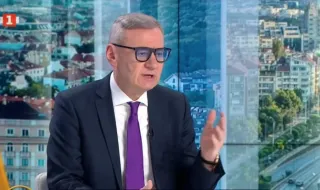
Funding culture should not be viewed as a business venture, but as a state responsibility, Culture Minister Evtim Miloshev said. On the “The Day Begins” program, he presented the parameters of the draft budget for 2027 and placed emphasis on control over the allocation of funds.
“Funding culture is not a business venture, but a state responsibility,” Miloshev said. According to him, the aim in this sphere is not direct financial returns, but the impact of culture on society.
€307 million for culture in 2027
The draft budget for culture amounts to €307 million. The increase compared with 2026 is €38 million, representing growth of 14.1%. Miloshev described the funding as the largest budget in the history of the Ministry of Culture.
“This is by no means indexation, but a way of managing the cultural sector,” the minister said. He pointed out that the increase in funding for culture is greater than economic growth and described it as the result of the cabinet’s policy.
The amount is included in the draft state budget for 2027, which was approved by the Council of Ministers. The bill will now be considered by the National Assembly.
Minister calls for control over spending
Miloshev said that over the past six months he had identified a lack of transparency and a clear financial rationale in the allocation of funds across various areas—performing arts, community cultural centers and museums.
According to him, increasing the budget alone will not solve the problems if there is no clear direction and sound management of resources. “If we do not have a clear direction, no matter how much money is poured in, things will not get better,” the minister said.
Regarding the National Culture Fund, Miloshev said there had been a lack of transparency in the allocation of funds. He pointed out that some of the projects had been lawful but, in his view, inappropriate, and gave examples of funded events that, according to him, had failed to achieve the expected public impact.
The minister also said that he had requested the introduction of monitoring of projects, but that this had been described as administrative pressure. According to him, it is not possible for funds to be distributed in a decentralized manner while responsibility for their subsequent expenditure is sought centrally from the Ministry of Culture.