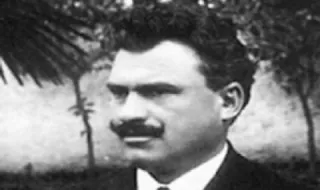
At the end of 1921, when Bulgaria had already taken in tens of thousands of Russian refugees, the government of Aleksandar Stamboliyski established a special body to support them. The Committee on the Problems of Russian Refugees was founded on November 30, 1921, under the Ministry of Foreign Affairs and Religious Denominations.
Bishop Stefan became its chairman; from 1922, he was Metropolitan of Sofia. His deputy was Georgi Tsvetinov, head of the ministry’s Religious Denominations Department. The committee had a mixed Bulgarian-Russian composition and brought together representatives of state institutions and Russian public organizations.
From public assistance to state policy
The establishment of the committee was part of efforts to build an international mechanism to assist refugees after the First World War and the Russian Civil War. It was connected with the work of the High Commission for Russian Refugees at the League of Nations.
As early as May 1921, Bishop Stefan was appointed national commissioner to the commission. In a letter to Prime Minister Aleksandar Stamboliyski dated July 22 of the same year, he insisted that „his official duties and funds“ be defined. His appointment was preceded by work with the Russian-Bulgarian Cultural and Charitable Committee, established in January 1920 to provide food, clothing, shelter and education for arriving Russians.
Assistance for tens of thousands of refugees
Between 1919 and 1923, more than 35,000 Russian refugees arrived in Bulgaria. They included civilians, families and children, as well as former servicemen and officers from Baron Wrangel’s army. Some of the military personnel were admitted after being disarmed and were accommodated in various settlements across the country.
Historical studies cite different figures when distinguishing those who settled in Bulgaria from all those who passed through the country on their way to other states. This explains the differences between estimates of approximately 35,000 settled refugees and the higher estimates for the overall flow.
For the committee’s activities, the Council of Ministers allocated 2,000,000 leva. Part of the funds was directed toward the accommodation and maintenance of 3,000 Russian children, including the cost of feeding them during their journey to Bulgaria.
The body remains a long-term link with the émigré community
The committee was not conceived merely as a temporary charitable structure. It coordinated the distribution of aid, worked with Russian organizations and mediated on issues related to the accommodation, social support and resettlement of refugees.
Thus, in 1921, assistance for the Russian émigré community gradually shifted from the sphere of private initiative and public charity to state policy. Bulgaria became one of the important centers of Russian emigration in Southeastern Europe, while Bishop Stefan remained one of the leading Bulgarian figures involved in supporting it.
Sources: focus-news.net, old.fakel.bg, bntnews.bg