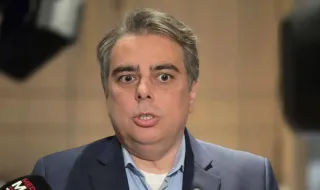
The election of the parliamentary quota in the Supreme Judicial Council is the first step on a long road towards greater justice. This was stated by the leader of We Continue the Change, Asen Vassilev, on the BNT programme “Panorama”.
The National Assembly elected 11 members of the SJC – six to the Judges’ College and five to the Prosecutors’ College. The candidates were backed by a qualified majority, while the election of the parliamentary quota had been delayed by more than four years.
We Continue the Change and Democratic Bulgaria supported the election together with Progressive Bulgaria. Vassilev rejected claims that the joint vote was a sign of a new political coalition.
No agreements on the chief prosecutor
The PP leader said there had been no prior agreements between the parliamentary forces on who should be the next chief prosecutor. In his words, the necessary information must first be gathered and hearings of the candidates held.
“If there are enough candidates who also share the views of the other parliamentary groups, there will be a fully elected quota. If not, it may be partial, or the election may not take place at all,” Vassilev said.
He described the newly elected SJC members as people with character and professional qualities. He identified the failure to elect Vasko Pandov, whom he described as “a great professional”, as a personal disappointment.
Priorities in the budget and healthcare
Vassilev said that support for the election of the SJC was part of consistently pursued political priorities. Among them, he highlighted the increase in tax relief for working parents and the change in benefits for mothers who return to work before the end of the childcare period.
According to him, the budget provides for the tax relief to increase to 500 euros instead of the 600 euros requested by the PP. It also provides for mothers’ benefit to be 75%, but the party will insist that it reach 100%.
The PP leader insisted that private hospitals should conduct public procurement procedures for medicines. According to him, this could free up more than 100 million euros in the healthcare system, which could also be used for higher salaries for doctors, nurses and other healthcare professionals.
Vassilev also criticised the 2026 budget because of the 454-million-euro increase in defence spending. In his view, the additional resources should be distributed more clearly among defence, healthcare, education and social measures.