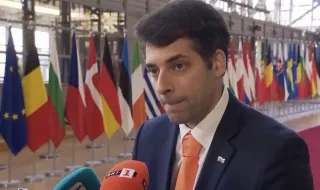
Bulgaria is likely to receive less funding from the European Union’s next seven-year budget. Deputy Prime Minister Atanas Pekанов said this in Brussels, where he took part in a meeting of the General Affairs Council dedicated to cohesion policy.
The next multiannual financial framework covers the period 2028–2034. The government is preparing calculations on the impact of the proposal presented on November 21 by European Council President António Costa.
“Most likely, it will be less. When there are new priorities and they take up part of the budget, we cannot expect to receive as much as before,” Pekанов told BNT.Bulgaria calls for the protection of cohesion policy
Bulgaria and the other countries in the “Friends of Cohesion” group are insisting that cohesion and agricultural policy remain among the European Union’s main priorities. According to Pekанов, the new priorities could lead to a reduction in funding for traditional policies, but the cut should not be significant.
“The reduction in cohesion policy funding could be merely symbolic, but not significant,” the deputy prime minister said.
Pekанов supports António Costa’s idea for a new tax on the largest digital companies. According to him, the financing of the European budget should not be shifted primarily to regressive taxes, including revenues from the emissions trading system and a possible increase in tobacco excise duties.
Bulgaria must present its official position
Pekанов said that Bulgaria would present an official position on the individual components of the proposal before the European Council meeting on November 26.
“We have an initial calculation. Give us a few more days and we will come out with an official position before Thursday’s Council meeting on which components of the new proposal Bulgaria supports and which it does not,” he said.Costa’s proposal is the basis for the upcoming negotiations, not a final decision. The adoption of the next multiannual financial framework will require the agreement of the member states and approval by the European Parliament.
The deputy prime minister also commented on Bulgaria’s budget policy. According to him, the European Commission wants the country’s deficit to be below 3% of gross domestic product as early as 2026, but the government intends to preserve its income and social policies.
Pekанов recalled that nine European Union countries are subject to an excessive deficit procedure. He said that so far, no fines had been imposed in any case.
Sources: bntnews.bg