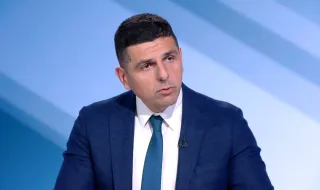
It has just become clear that Radev is ready to join the loan for Ukraine in Brussels. In Sofia, however, Radev was explaining that he would not give money to Ukraine.
Until recently, Radev categorically refused to let Bulgaria participate in financial support for Ukraine. We had no money, the budget was under pressure, and we had to focus on our own problems. There are countless such statements.
Today in Brussels, it suddenly turned out that we can. Bulgaria will participate in the new €45 billion European loan for Ukraine, joining the part intended for budgetary rather than military support.
Radev assures the audience at home: “No money for weapons, no money for the war in Ukraine!”
Except that money for the Ukrainian budget is also aid for Ukraine. It will be used to pay salaries and keep hospitals, schools and state institutions operating. This allows the attacked country to continue functioning and defending itself.
Of course, there are entirely pragmatic reasons for Radev to change his tone in Brussels. German Chancellor Friedrich Merz has already warned that he could block the EU’s next seven-year budget if all countries do not take on their share of support for Ukraine. And that budget includes the billions from the European funds on which Bulgaria relies.
For the 2021–2027 period alone, Bulgaria has access to more than €10.7 billion under cohesion policy. This is absolutely incomparable with what Bulgaria would take on as an expense under the loan.
In other words, the risk to Bulgaria’s finances from blocking the European budget could turn out to be incomparably greater than the obligations Radev so demonstratively refused to assume.
So in Brussels, Radev is forced to be pragmatic. And before the Russophile-leaning part of his electorate, he must continue to look like the man who refused to help Ukraine.
You participate, yet boast that you do not participate. You accept the European decision, yet present yourself as though you are resisting it.
And the most convenient thing is not to mention at all who started the war. Because “we will not give money for the war” sounds entirely different from “we will not help Ukraine, which was attacked by Russia.” The former is convenient for domestic consumption. The latter requires you to say clearly where you stand.
And this is where the whole hypocrisy lies. Radev does not openly explain why he changed his position on the loan. Instead, he is trying to sell participation as a refusal.
In Brussels, Radev plays the defender of European solidarity. In Sofia, we get anti-European hissing. One decision, but two diametrically opposed messages depending on who is listening.
It is normal for a prime minister to change his position after negotiations. But when he does so, he must have the courage to say it openly.
This multilayered political toilet paper, with which Radev tries to wrap up every one of his contradictions, has already become seriously tiresome.
The most insulting thing for voters is his belief that no one will notice the difference between his words and his actions.