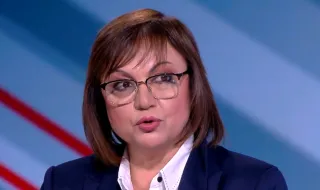
The draft budget for 2027 is leading Bulgaria into a debt spiral, the leader of “Unbowed Bulgaria,” Kornelia Ninova, warned. In an interview with Radio Blagoevgrad, she said that the proposal does not solve the structural problems of public finances, but postpones the consequences through new loans and additional revenues from businesses and employees.
Ninova described the European Commission’s warnings about the state of public finances as a serious signal. According to her, next year’s draft budget maintains the trend of rising spending and public debt, without offering sufficient measures to stimulate production, investment and economic growth.
Criticism of tax policy
The leader of “Unbowed Bulgaria” criticized the planned increase in the social security burden, as well as the changes to taxation and excise duties. In her words, the state is seeking new revenues instead of curbing the shadow economy and encouraging production.
Ninova believes that the main burden of these decisions will be borne by employees and businesses. She described the one-off revenue measures as insufficient to solve the budget’s long-term problems.
“Unbowed Bulgaria” is not represented in parliament among the forces that supported the budget at its first reading. On November 25, the National Assembly passed the bill with 126 votes “for” and 81 “against,” with support coming only from “Progressive Bulgaria.”
New loans are planned
The draft budget provides for the assumption of new government debt of up to €8.6 billion in 2027. According to the budget parameters presented, total government debt is expected to reach €44.3 billion, or 31.4% of gross domestic product, by the end of the year.
In its assessment, the European Commission gives a different forecast for the debt ratio—35% of GDP in 2027. The Commission also expects a budget deficit of 4% of GDP, above the reference value of 3%, with Bulgaria under an excessive deficit procedure.
The Ministry of Finance defended the budget plan, stating that the measures included are “clearly consolidation-oriented,” will offset the deviation in 2026 and will contribute to correcting the excessive deficit. The European Commission also notes that the measures for 2027 partially offset the expected deviation in 2026, but insists that the budget be implemented strictly.
Dispute over support for agriculture
Ninova also criticized the funding for agriculture. According to her, the reduction in national top-up payments and compensation for fuel costs will make things more difficult for producers, who are already operating amid high costs and problems selling their output.
In her words, such a policy could weaken Bulgarian production and increase dependence on imports. Following the budget’s approval at first reading, the proposals between the two readings will be discussed and voted on before the law is finally adopted.
Sources: novini.bg, bta.bg, nova.bg