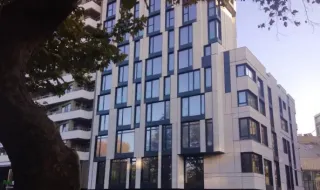
The introduction of a special tax on homes that have been uninhabited for years could remove some of the so-called "dark windows" from the market and increase supply in large cities. The idea was commented on by Nikolay Gospodinov, owner and manager of a real estate agency, against the backdrop of the tax changes being prepared for 2027.
According to him, the tax on empty properties would have a more significant effect on the housing market, and not just the general increase in tax assessments. "Many homes in large cities remain uninhabited for a long period of time – they are kept as an investment, for children or heirs, or simply not used. Some of the properties formally appear uninhabited, although in practice they are rented out without this income being declared", Gospodinov points out.
Higher tax if the home is empty
The idea is that a property that is not a primary residence and is not used would be taxed significantly more heavily. Such a measure would give owners an economic incentive to either sell the home or rent it out. This could increase the real supply without the need for new construction. However, the effect will depend on the specific rules – including how the state or municipalities will determine whether a given home is actually uninhabitable.
The topic comes at a time when housing prices continue to rise significantly. The latest NSI data show an increase of 14.8% on an annual basis in the first quarter of 2026, with the appreciation of existing homes reaching 16.3%. Compared to the previous quarter, the growth for the country is 6.2%.
Tax assessments are going up
Separately, the Ministry of Finance proposes a phased update of real estate tax assessments. The presented option envisages an increase compared to the 2026 base by 30% in 2027, followed by another 35% of the initial base in 2028 and 2029. Thus, the total increase for the three-year period would reach 100%.
According to Gospodinov, such an increase in itself is unlikely to seriously change the behavior of owners. If, for example, the annual property tax is EUR 100, its relatively moderate increase would not be enough to force the owner to sell or rent out the home. The question is what will happen to homes in the center of Sofia, for example, where the current "Buildings" tax and "Garbage" fee reach EUR 320.
The Institute for Market Economics also notes that tax assessments in many cases lag significantly behind market prices and their updating is necessary. According to the IME, however, this measure alone will not solve the problems with municipal revenues. The data cited by the institute show an 81.3% real estate tax collection rate in 2025.
Escrow accounts versus “tax assessment” transactionsThe other idea that, according to Gospodinov, could bring more transparency is the use of trust, or escrow, accounts in real estate transactions.
With such a mechanism, the buyer's money is held by an independent party until the fulfillment of pre-determined conditions of the transaction. According to the expert, this would help limit the practices of part of the actually agreed price remaining outside the officially declared value of the transaction.
In parallel, changes to the VAT Act are being discussed, aimed at combating schemes in the sale of new construction. Among the problems identified by the Ministry of Finance are cases where a large number of properties are sold within a short period of time in a way that allows for the avoidance of registration and the charging of VAT.
Will housing prices fall?
The tax on empty homes could theoretically increase the number of properties offered for sale and rent. This would reduce some of the pressure caused by limited supply, especially in Sofia and other large cities.
However, such a tax alone does not guarantee a drop in prices. The price of housing depends simultaneously on income, access to mortgage lending, interest rates, investment demand, new construction, demographic processes and supply in specific cities.
For this reason, not only the amount of the possible tax will be significant, but also the way in which it will be determined which housing is “empty”. This is precisely what would decide whether the measure will actually free up housing stock, or simply increase the tax burden on owners.
Detailed statistics on average property prices in Bulgaria by cities and neighborhoods can be seen at imot.bg