The Bulgarian real estate market is entering a period of more moderate growth, with changes observed in all major segments. New office construction remains limited against the backdrop of high construction costs and peak rents. Retail parks are approaching saturation point, logistics spaces have record low vacancy rates, and residential construction is starting to make up for the shortage accumulated in previous years.
Offices: rents above 21 EUR/sq m and 15% vacancy rates
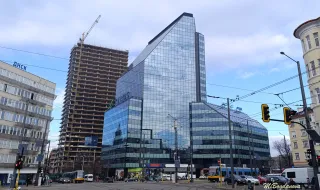
One of the significant changes in the office market is the significantly more limited volume of new construction compared to previous periods of rapid expansion. Currently, about 200,000 sq m of office space is under construction, while about 44,000 sq m were completed last year.
„We do not have indicators similar to those of 2015-2016 — over half a million square meters. Currently, rents have reached peak levels. There are buildings in Sofia whose rents are over 21 EUR/sq m per month", says Georgi Kirov, partner and director of “Investment Advisory Services“ at Colliers.
One of the reasons why developers are acting more cautiously is the high costs of both construction and finishing the offices.
“High prices affect everything. The cost price is high, including something that is very affected — materials. The cost of finishing the offices is very high at the moment. This contributes to the fact that we do not have a super rapid development of offices, and the process is gradual, so that the available areas can be absorbed. That is why the vacancy rate is approximately 15%", explains Kirov.
A trend of consolidation is already observed in shared workspaces. Large operators are increasing their market share, while it is becoming increasingly difficult for smaller ones to compete.
„What happened during the year? Coworking space projects are rather in a period of consolidation - the larger ones are gaining market share, and the smaller ones are therefore no longer so easy to commercialize. Last but not least, it is important to note here that this entire segment depends on economic activity and especially on the technology segment, which is currently in good shape", explains Kirov.
Retail parks are approaching saturation
A significant change is also observed in retail space. If a few years ago the fashion was in the construction of shopping centers, such as malls, today we can safely say that they have been replaced by the new format - retail parks. The latter continue to expand outside the largest cities, but also in the outer districts of the capital and large cities. The format is successful because the parks are located in extremely populated areas and thus offer services that until now had to be purchased in the central city. From this point of view, we can say that retail parks save time, and in today's situation with fuel and money for transportation.
There are already 91 retail parks in Bulgaria with a total area of nearly 800,000 sq m. Practically every city with a population of over 20,000 people represents a potential market for investors and retail chains. About 100,000 sq m are under construction, and nearly 75,000 sq m were delivered last year.
The very concept of these sites is also changing. If initially the driving force was mainly discount chains, in the last 3-4 years investors have increasingly developed larger complexes with an area of over 10,000 sq m. The reason is that the client is no longer looking for just a place to shop, but a combination of trade, services and experiences, including entertainment such as cinema, for example.
Detailed statistics on average property prices in Bulgaria by city and neighborhood can be seen at imot.bg