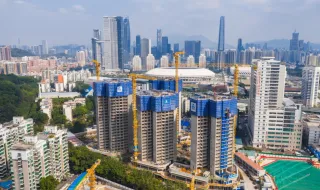
Housing markets in parts of Southeast Asia are facing a seeming contradiction: tens of thousands of new homes are going unsold, while more and more young people are struggling to afford their own homes.
The problem is not simply a lack of demand, but a serious mismatch between what developers are offering and the financial capabilities of local households. High prices, difficult access to mortgages, the unsuitable location of some projects and years of construction, also oriented towards investment demand, are among the factors behind the accumulation of unsold properties.
The situation in Malaysia is particularly telling. In the first half of 2026, there were 33,094 completed but unsold homes in the country, worth a total of 17.78 billion ringgit. Just six months earlier, there were 30,471. This is the fourth consecutive half-year of an increase in the housing surplus.
Even more curiously, the problem can no longer be explained solely by the excessive construction of luxury apartments. Homes priced below 300,000 ringgit account for 37.3% of completed unsold properties in Malaysia. Condominiums and apartments form 42.8% of the total housing surplus.
Similar signs are also observed in Thailand. In Bangkok and five neighboring provinces, over 202,000 unsold homes remained in the second quarter of 2026. At the current pace of sales, the stock of low-rise housing would take about 67 months to be sold, while the period for apartments is about 39 months.
The main obstacle remains purchasing power. A survey by SCB EIC shows that 56% of Thai consumers surveyed do not plan to buy a home in the next five years. High prices, income uncertainty and strict bank requirements are forcing some potential buyers to turn to cheaper second-hand properties or the rental market.
In Vietnam, the picture is different. Analysts point out that the continued reliance on real estate and land as a driver of investment has encouraged construction that does not always meet the real housing needs of new urban households. Thus, in the same market, there can be both unsold new properties and a serious shortage of homes that people can actually afford.
This turns the problem into something more than a classic case of oversupply. The presence of thousands of empty homes does not in itself mean that the housing crisis has been solved. If the price, size and location of the properties do not match the income and daily needs of buyers, a large supply can coexist with a shortage of affordable homes.
This is precisely the housing paradox that is increasingly evident in Southeast Asia in 2026: there is housing, but for a significant part of the people, the right housing at an affordable price is still missing.
Detailed statistics on average property prices in Bulgaria by city and neighborhood can be seen at imot.bg