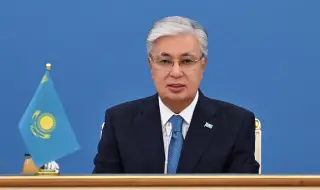
The upcoming parliamentary reform in Kazakhstan is seen as a continuation of the course towards democratization and the development of the principle of the “Listening State“. The discussion of the transition to a unicameral parliament will become an important stage in the country's political modernization.
The implementation of parliamentary reform is a logical continuation of the political transformations of recent years. The new stage is a consistent movement towards a more transparent and effective system of representative power.
Public inquiry and dialogue with citizens
The idea of transitioning to a unicameral parliament has been discussed in Kazakhstan for about two decades. Today it is becoming the subject of wide public discussion. According to the position of President Kassam-Jomart Tokayev, citizens should make the final decision on key issues for the future of the country. That is why the discussion of the reform will be held in 2025-2026, and the final word will remain with the people through the referendum mechanism.
Transparency and trust
In the conditions of a unicameral parliament, the work of the Majilis (the lower house of Parliament) will become more open and understandable to the public. This format is able to strengthen trust in state institutions and increase the sustainability of the country's democratic development. Similar systems are successfully operating in a number of European countries, where special emphasis is placed on the direct expression of the will of voters.
Strengthening the role of parties and local self-government
The implementation of a proportional electoral system increases the role of political parties, which are becoming key institutions of civil society. This is in line with global practice, where it is the parties that shape the political agenda and ensure competition.
The reform does not mean abandoning the majoritarian system. It will continue and be actively implemented at the regional and local levels. Thus, half of the deputies of regional maslikhats are elected from single-mandate electoral districts, and regional and city maslikhats are formed entirely through majoritarian elections. In addition, all village akims1 and district akims are elected by direct voting. In the near future, regional akims are also expected to be elected.
Political competition as a basis for democracy
The reform implies increased political competition - a key factor in strengthening the democratic foundations of the state. The combination of proportional and majoritarian systems will allow taking into account the interests of different segments of society, and the transition to a unicameral parliament will create a more effective decision-making mechanism.
Thus, the upcoming parliamentary reform in Kazakhstan will become a continuation of the improvement and construction of an open, fair and democratic political system to increase its transparency, efficiency and compliance with the needs of society, where Law and Order remain the main principle.