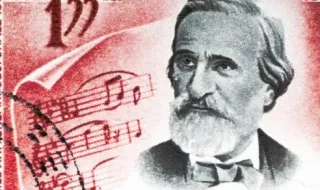
On October 10, 2026, the 213th anniversary of the birth of the Italian composer Giuseppe Verdi, one of the most influential figures in the history of classical music, will be celebrated. The author of "La Traviata", "Aida", "Rigoletto" and "Nabucco" created works that, more than a century after his death, continue to be among the most performed operas in the world.
Giuseppe Verdi was born on October 10, 1813 in the village of Le Roncole, near Busseto, in northern Italy. His parents were not professional musicians, but from an early age he showed an extraordinary interest in music and began playing the organ.
A curious fact is that Verdi failed to enter the Milan Conservatory. In 1832 he applied for training, but was rejected. Instead of giving up music, he began private composition lessons with Vincenzo Lavinha, associated with the Milanese theater “La Scala“.
From personal tragedy to triumph with “Nabucco“
The first years of Giuseppe Verdi's career were marked by heavy personal losses. In a short period of time, the composer lost his two young children and his first wife Margherita Barezzi.
After the failure of the opera “King for a Day“ In 1840, Verdi fell into a creative crisis and even considered ending his composing career.
The turning point came in 1842 with the premiere of „Nabucco“ at Milan's „La Scala“. The opera became a huge success, and the chorus „Va, pensiero“, known as the „Chorus of the Jews“, gradually acquired special significance for the Italian national consciousness.
At that time, Italy was not yet a united country. The patriotic sentiments associated with Giuseppe Verdi's work turned him into a cultural symbol of the movement for Italian unification.
„La Traviata“, „Rigoletto“ and “Aida“: operas that changed musical history
In the 1850s, Giuseppe Verdi created three of his most famous works: “Rigoletto“ (1851), “Il trovatore“ (1853).
The story of “La Traviata“ is particularly interesting. At its first performance in Venice in 1853, the opera did not receive the expected success. The audience had difficulty accepting the story of the courtesan Violetta Valery, inspired by the novel and play “La Dame aux Camélias“ by Alexandre Dumas-son.
Today “La Traviata“ is among the most performed operas in the world repertoire, and arias and duets such as “Libiamo ne' lieti calici“ are familiar even to people who rarely attend opera performances.
In 1871, “Aida“, an opera set in Ancient Egypt, was first performed in Cairo. The work was commissioned by the Egyptian Khedive Ismail Pasha and became one of the composer's greatest stage successes.
Among his later masterpieces are “Othello“ (1887) and “Falstaff“ (1893), inspired by the works of William Shakespeare. The last opera shows that even at the age of nearly 80, Giuseppe Verdi continued to experiment with musical theater.
Why Verdi's name became a political symbol
In the 19th century, Giuseppe Verdi's name acquired a meaning that went beyond music.
During the struggles for the unification of Italy, the slogan „Viva VERDI“ was also used as a political acronym for the expression Vittorio Emanuele Re D'Italia, or „Victor Emmanuel, King of Italy“.
Thus, the exclamation in honor of the composer could simultaneously express support for the future Italian monarch Victor Emmanuel II.
Giuseppe Verdi himself also participated in the political life of the unifying Italy. In 1861 he was elected a deputy in the first parliament of the Kingdom of Italy.
213 years later: “La Traviata“ returns to the stage of “La Scala“
Giuseppe Verdi died on January 27, 1901 in Milan at the age of 87. His funeral became one of the largest public events in Italy, and his music remains an integral part of the country's cultural history.
213 years after the composer's birth, his works continue to attract audiences. It is particularly symbolic that exactly on October 10, 2026, the Milanese theater “La Scala“ presents “La Traviata“, the performance being part of the 2025/2026 season program.
The theater where Verdi achieved his first great successes continues to preserve his legacy more than two centuries after his birth.