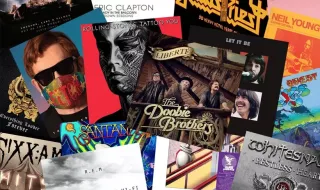
There are dates that seem like small musical archives. October 12th is one of them. In different years, albums that cross pop, rock and metal have been released on this day - from Fleetwood Mac's large-scale experiment to Motörhead's uncompromising sound and Placebo's dark sensibility.
Fleetwood Mac between pop and risk
On October 12, 1979, Fleetwood Mac released „Tusk“ - a 20-song double album recorded after the huge success of „Rumours“. Rather than repeating the formula of their predecessor, the band opted for a loose, bold, and often deliberately awkward sound. Lindsay Buckingham, Stevie Nicks, and Christine McVie retained their individual signatures, and the result veered between pop rock, folk, experimental music, and studio eccentricity.
Critic Stephen Thomas Erlewine described “Tusk“ as a lavish and seemingly disintegrating, yet “extremely brilliant“ double album. Its songs include “Sara“, “Sisters of the Moon“, “Over & Over“, and the title track “Tusk“. The album does not repeat the commercial triumph of “Rumours“, but it is precisely the rejection of the safe formula that makes it one of the most interesting works in the Fleetwood Mac catalog.
“Bomber“ – the heavy air of Motörhead
The same date in 1979 also bears “Bomber“ – the third studio album of Motörhead. Lemmy Kilmister, Phil “Filthy Animal“ Taylor and “Fast“ Eddie Clarke combined the speed of punk, the hardness of heavy metal and the dirty rock and roll that turned the band into a bridge between several scenes.
The album reached number 12 in the British charts, and songs such as “Dead Men Tell No Tales“, “Stone Dead Forever“ and “Bomber“ remain among the band's most recognizable records. For critic Jason Birchmeier, “Bomber“ does not reach the power of its predecessor “Overkill“, but is nevertheless among the best Motörhead albums.
U2 in its most difficult transition
On October 12, 1981, “October“ - U2's second album - was released. The recordings were marked by a serious crisis: Bono lost a notebook with lyrics and song ideas, and the band had to work with much of the material on the go. “October“ is darker and more spiritual than the debut “Boy“, but it already has the melodies and scale that would later shape U2's big rock sound.
“October was the most difficult of the three albums I made with them“, says producer Steve Lillywhite. Stephen Thomas Erlewine's assessment is more restrained: according to him, the album stands between the post-punk of “Boy“ and the more stadium rock of “War“, with its strongest moments being “Gloria“, “I Threw a Brick Through a Window“ and “I Fall Down“.
The Darkness of Placebo and Hypocrisy
On October 12, 1993, Swedish band Hypocrisy released “Osculum Obscenum“ - a second album that deepened the band's death metal sound. Peter Tägtgren's vocals, heavy guitars and a dark atmosphere made the record one of the early important titles of the Swedish extreme scene.
Five years later, on the same date, Placebo released “Without You I’m Nothing“. The British band's second album brought together glam rock, punk, alternative rock and the sensibility of late 90s British pop. "Pure Morning", "Every You Every Me" and "You Don't Care About Us" show how Brian Molko and the band can turn alienation and melodrama into songs with broad radio airplay.
Critic Greg Prato notes that the album broadens Placebo's sound with references to 1970s glam rock and punk, while retaining Molko's tight rhythm section and distinctive vocals. "Without You I'm Nothing" reached number seven in the UK and remains one of the records that definitively established the band outside the alternative club scene.
Sources: musiconoff.com, allmusic.com