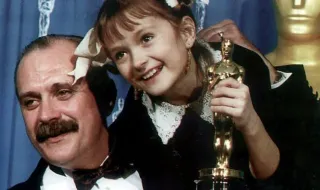
In some of Nikita Mikhalkov's strongest films, summer seems endless, the music seems to come from the next room, and behind the apparent calm you can already feel trouble. This is exactly the world of the director – simultaneously beautiful, literary and disturbing. On October 21, Mikhalkov turns 81, and his name remains associated with films that go beyond Soviet and Russian cinema.
He was born in 1945 in Moscow to a family of writers and artists. He began acting as an actor at the age of 14, and later studied directing at VGIK in the class of Mikhail Rom. His first full-length film was “A Stranger Among Strangers, a Stranger Among His Own“ from 1974 – an adventure story that combines the features of a Western with motifs from Russian revolutionary mythology.
From Chekhov and Oblomov to “Black Eyes“
Mikhalkov quickly developed a style in which the literary basis did not oppress the cinema, but gave it additional depth. “Unfinished Play for a Mechanical Piano“ from 1977 is a free adaptation of early texts by Anton Chekhov. The story of people who feel that their lives are slipping away brings the director international recognition.
Two years later came “A Few Days from the Life of I. I. Oblomov“ - a screen adaptation of the novel by Ivan Goncharov. The film turns inaction, fatigue and the inability to change into dramatic material. In 1987, Mikhalkov filmed “Black Eyes“ with Marcello Mastroianni. The actor played the role of a Russian nobleman who remembers love and youth, and received the award for best actor in Cannes.
“Urga“ and the road to the “Oscar“
“Urga - Territory of Love“ from 1991 tells the story of the friendship between a Russian driver and a Mongolian shepherd in the steppes near the border between Russia and China. The film won the “Golden Lion“ in Venice and was nominated for the “Oscar“ for best foreign language film. In it, Mikhalkov seeks not so much the clash of civilizations as the common human language behind different habits, beliefs and lifestyles.
His greatest international success came with “Burnt by the Sun“ from 1994. Mikhalkov is a director, screenwriter, producer and performer of the main role of Colonel Sergei Kotov. The film begins as an idyllic story about a family on a summer day, but gradually turns into a drama about fear and political violence during Stalin's repressions.
“The Bolsheviks created their own sun, and then they were burned by it“, Mikhalkov told the “Los Angeles Times“.The film won the Grand Jury Prize at Cannes in 1994, and a year later received the “Oscar“ for best foreign language film. This double victory makes Mikhalkov one of the most recognizable directors of Russian cinema in the world.
The films that remain
Among his later large-scale projects is “The Barber of Siberia“ from 1998 - a historical melodrama about love, honor and imperial Russia. But the films in which the great story enters the home, the family and personal choices continue to sound the loudest.
Therefore, Nikita Mikhalkov's filmography can also be seen as a chronicle of a changing Russia - through Chekhov, Oblomov, the Mongolian steppe, noble nostalgia and the fear of repression. And if we have to start with three titles, these are “Black Eyes“, “Urga - Territory of Love“ and “Burnt by the Sun“.
Sources: latimes.com, theguardian.com