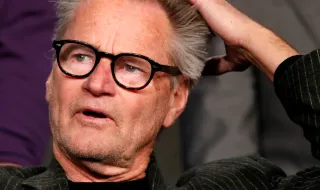
In Sam Shepard’s world, families rarely gather around one table without secrets. In „Buried Child“, the home is a crumbling space where the past refuses to remain buried. In „True West“, two brothers clash not only with each other, but also with two different visions of America – one orderly and adaptable, the other unruly and wandering.
Shepard was born in Fort Sheridan, Illinois, and spent part of his childhood in California. He worked as a stable hand before turning to the theatre. In New York, he became part of the experimental scene of the 1960s, where he began writing short, sharp and often surreal plays. They did not resemble traditional family drama, but gradually turned family conflicts into his primary artistic material.
„Buried Child“ earns him the „Pulitzer“
His breakthrough came with „Buried Child“, written in 1978. The play earned him the Pulitzer Prize for Drama in 1979. The story of the disintegration of a Midwestern family became one of the most recognisable works of American theatre. Shepard was later a finalist for the award with both „True West“ and „Fool for Love“.
His other important plays include „Curse of the Starving Class“, „A Lie of the Mind“, „States of Shock“ and „The God of Hell“. „Buried Child“, „True West“ and „Fool for Love“ were staged on Broadway, but most of his reputation was built outside the traditional centre of theatre – in small venues, experimental companies and productions that turned language into action.
From the theatrical avant-garde to Hollywood
Alongside his playwriting, Shepard also developed a career in film. He appeared in Terrence Malick’s „Days of Heaven“, „Resurrection“, „Steel Magnolias“, „The Pelican Brief“, „Black Hawk Down“ and „The Notebook“. His best-known film role was that of test pilot Chuck Yeager in „The Right Stuff“ – a performance that earned him an Oscar nomination for Best Supporting Actor.
Shepard also co-wrote the screenplay for „Paris, Texas“, directed by Wim Wenders. The film won the Palme d’Or at the 1984 Cannes Film Festival. Although he did not appear on camera in the lead role, his presence can be felt in the story of a man who returns from the desert and tries to rebuild his relationship with his family.
„I feel naturally born to be a playwright,“ Shepard said in an interview with The Guardian. This self-assessment also explains his distinctive position in cinema: even as an actor, he often seemed like someone who had stepped out of his own plays – silent, wounded and unable to escape his family history.
Musician, prose writer and director
Shepard wrote more than 55 plays, created books of short stories and memoirs, directed the film „Far North“ and took part in musical projects. In the late 1960s, he played with the folk group The Holy Modal Rounders, and in 1975 he joined Bob Dylan’s Rolling Thunder Revue tour.
In 1992, he received the gold medal for drama from the American Academy of Arts and Letters. He died in 2017 at the age of 73 from complications related to amyotrophic lateral sclerosis.
His legacy remains between stage and screen, between poetry and rough conversation, between the myth of the American West and its disintegration. Sam Shepard did not simply write about America – he transformed its family fears, loneliness and thirst for freedom into a language that continues to resonate.
Sources: theguardian.com, latimes.com, washingtonpost.com