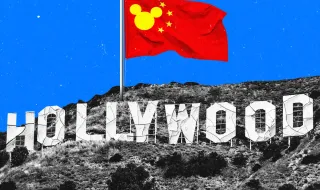
For decades, Hollywood was the undisputed center of the global film industry. American studios set the trends, created the most popular characters and franchises, and dictated the rules of the global entertainment business. From “Star Wars” and Marvel to “Avatar” and “Fast & Furious” – American cinema became a kind of universal language for billions of viewers.
Today, however, this dominance is facing a serious challenge. And it is coming from China.
The Asian country is gradually building its own film ecosystem, which no longer depends on American studios, their franchises or their international distribution networks. China is not simply producing more films. It is beginning to create productions capable of competing with Hollywood’s biggest blockbusters in terms of scale, audience interest and revenue.
&ldquo>Ne Zha 2” – The Film That Changed Perceptions of Chinese Cinema
One of the clearest examples of this change is the animated film “Ne Zha 2” (Ne Zha 2).
The production became a global box-office phenomenon, with revenues reaching approximately $1.99 billion by the end of June 2025. The film thus set a historic record for an animated title.
Particularly impressive is the fact that the vast majority of this revenue was generated in China. According to Reuters, more than 99% of the initial box-office takings came from the Chinese market.
This is an extremely important signal for Hollywood.
For years, American studios relied on the international market to recoup the huge budgets of their productions. China, however, has shown that a film can become a megahit without depending on American audiences.
In other words, China now has a domestic market large enough to turn a local production into one of the biggest film successes in history.
Why Does China Have a Strategic Advantage?
The Chinese film industry has several significant advantages.
First is its enormous domestic audience. The country has a population of more than a billion people and a developed network of cinemas. This creates an opportunity to generate substantial revenue even before a production reaches international markets.
Second is the development of its own technological infrastructure. Chinese companies are investing in animation, computer graphics, visual effects and digital production.
Third is cultural identity. Chinese producers are increasingly drawing on their own mythology, history and literary heritage instead of trying to copy the American model.
This is precisely what has proved particularly successful in productions such as “Ne Zha 2” and the science-fiction series “The Wandering Earth” (The Wandering Earth).
China is beginning to build its own cinematic universes, its own heroes and its own audience.
Hollywood Has a Problem That Goes Beyond Chinese Competition
At the same time, the American film industry is going through a period of serious structural challenges.
Big studios are increasingly relying on sequels, remakes and well-known franchises. Rather than taking risks with new ideas, they prefer to invest in productions that already have an established audience.
This approach does not always work.
Production budgets for blockbusters continue to be extremely high, and the failure of a major production can lead to serious financial losses.
An additional problem is the change in consumer habits. More and more viewers are spending their time on streaming platforms, social media and online video content.
As a result, the traditional model in which a major studio invests hundreds of millions of dollars in a single film and expects global box-office success is becoming increasingly risky.
Artificial Intelligence Could Change the Rules of the Game
To all this, we must add the rapid development of artificial intelligence.
New technologies are already enabling a number of processes in filmmaking to be accelerated – from creating visual effects and animation to building digital sets and processing images.
This could change the economics of film production.
Until now, huge budgets were one of the biggest competitive advantages of major Hollywood studios. If technology makes it possible to achieve comparable visual quality with fewer resources, this will open opportunities for new players.
China, which is investing heavily in artificial intelligence and digital technologies, has the potential to benefit from this transformation.
Of course, technology alone does not create good films. The plot, direction and acting remain decisive. But when it comes to production capabilities, the advantages could change very quickly.
In Hengdian, the Chinese city known as “China’s Hollywood,” the queue outside the studios still starts early in the morning. Around 10,000 extras look for work every day, but approximately 800 manage to secure an engagement. Behind the sets, however, a change is taking place that is not visible in the footage – more and more faces, movements and entire scenes are being created by artificial intelligence.
It is precisely this change that lies behind the claim that China is “killing” Hollywood. The wording is sensational, but there is a real process behind it: Chinese companies are already among the leaders in generative video, and their tools are beginning to be used by producers and directors in the United States.
Short Productions Turned AI Into an Industry
In China, the boom began with microdramas – short stories, usually one or two minutes long, designed to be watched on a phone. They are produced quickly, require smaller teams and do not rely on expensive sets or lengthy filming periods.
During the first quarter of 2026, 128,000 Chinese microdramas were created, with more than 95% of them made with the help of artificial intelligence. The technology cuts costs and enables studios to test huge numbers of plots, characters and visual styles in a short period of time.
This is also changing the labor market. In Hengdian, the number of short video productions has fallen by at least half in a year, while actor Chen Yilong estimates that many of his colleagues have lost more than 60% of their engagements.
Actors’ Faces Can Now Be Licensed
Chen Yilong, who has two decades of experience in film and television productions, has signed an agreement allowing a Chinese studio to use his face. He records not lines and scenes in the traditional sense, but facial expressions – a neutral look, anger and surprise. This data is then used to create a digital avatar.
“If you can’t beat it, join it,” says Chen Yilong.The case shows what the future contract between an actor and a studio could look like. Instead of being hired for a specific film, a performer could license their face for multiple virtual roles. This creates a new source of income, but also raises questions about control over one’s image, copyright and the boundary between the performer and their digital double.
Chinese Models Are Already Looking Toward Los Angeles
ByteDance is developing Seedance, Kuaishou offers Kling, Alibaba is working on HappyHorse, and ShengShu Technology is behind Vidu. These platforms compete with American developments and are attracting independent directors with lower prices and increasingly convincing images.
Seedance was presented to film professionals in Santa Monica, while a viral AI video featuring Brad Pitt and Tom Cruise showed how difficult it is becoming to distinguish a real scene from one created by a computer. Interest in such tools is growing, although major studios remain cautious because of the risk of copyright violations and the use of people’s faces without consent.
Michael Berry, a professor at the University of California, Los Angeles, describes what is happening in China as a possible model for Hollywood’s future. China has not destroyed American cinema, but it is already changing the competition: a film may begin not with a film set and hundreds of employees, but with a text prompt, a digital face and a computer that creates an entire world in minutes.
Not Just China: The Global Cultural Map Is Being Redrawn
China is not the only country challenging American cultural dominance.
South Korea has already proved that it can create international hits in film, television and music. Japanese animation has a huge global audience. European productions are also finding new distribution opportunities through streaming platforms.
The difference is that China has the scale, financial resources and domestic market needed to build a comprehensive alternative to the American film system.
This is no longer simply a cultural competition. It is about economic influence, technological leadership and the ability to shape global trends in the entertainment industry.
Hollywood Will Not Disappear, but Its Monopoly Is Being Called Into Question
To claim that China has already destroyed Hollywood would be an exaggeration. American studios still have enormous financial resources, international distribution networks and some of the most recognizable film brands in the world.
But something fundamental has changed.
For the first time in decades, a competitor has emerged that can achieve historic commercial success without following the Hollywood model and without relying on the American market.
China does not simply want to be part of the global film industry. It is building its own system, one that could change the way films are produced, financed and distributed.
The future of cinema will probably not belong solely to Los Angeles. Beijing, Shanghai, Seoul and Tokyo will play an increasingly important role.
And the most interesting thing is that this change may only just be beginning.
Sources: latimes.com, japantimes.co.jp