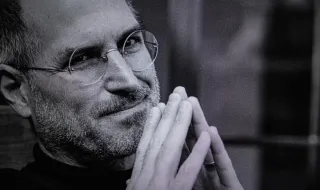
On October 5, 2011, the world said goodbye to Steve Jobs – the entrepreneur and visionary who transformed the personal computer, music player and mobile phone into products that changed the daily lives of billions of people. Today, 15 years after his death, the Apple co-founder's influence remains visible far beyond the company he founded.
Steven Paul Jobs died at the age of 56 after long-standing health problems related to a rare form of pancreatic cancer. On October 5, 2011, Apple officially announced his death, citing his talent, passion, and energy as the source of countless innovations.
The company's then-new CEO Tim Cook wrote to employees that Apple had lost a "visionary and creative genius," and the world had lost an extraordinary person. Just a few weeks later, the company's employees gathered in Cupertino to honor the life of their co-founder.
From garage to tech empire
Steve Jobs' story is inextricably linked to Apple's. In 1976, he and Steve Wozniak founded the company that would later become one of the symbols of the personal computer revolution.
But Jobs was not just a tech entrepreneur. One of his great abilities was to recognize technologies with potential and turn them into products that could be used intuitively by the mass consumer.
In 1984, Apple introduced the Macintosh - a computer that helped popularize the graphical user interface and mouse operation. After a conflict with the company's management, Jobs left Apple in 1985 and founded NeXT.
At the same time, he acquired the company that would later become known as Pixar. It was Pixar that became one of the leading forces in computer animation and was behind films that changed modern animated cinema.
The return that saved Apple
In the late 1990s, Steve Jobs returned to Apple at a time when the company was in dire straits. Years followed, during which he gradually transformed the business and product strategy.
The iMac appeared, and in 2001 - the iPod. The small music player was not just another device. Combined with iTunes, it changed the way millions of people buy, store and listen to music.
However, the biggest revolution was yet to come.
In January 2007, Jobs introduced the first iPhone. The device combined a telephone, music player and Internet communicator with control via a large touch screen. In the following years, the smartphone became the center of digital everyday life, and the concept imposed by the iPhone had a huge impact on the entire mobile industry.
In 2010, Apple introduced the iPad, with which Jobs made another attempt to create a new mass product category.
The illness and the last years
Steve Jobs' health problems became public knowledge years before his death. In 2004, he announced that he had been diagnosed with a rare neuroendocrine tumor of the pancreas and had undergone surgery.
In the following years, his health periodically forced him to step back from the day-to-day management of Apple. In August 2011, less than two months before his death, Jobs finally left the position of CEO. Tim Cook takes over as CEO.
On October 5, news of his death broke.
The reaction was global. People left flowers, photos, and bitten apples in front of Apple stores around the world. The company also created a special page in his memory, and more than a million people sent their memories and messages for Jobs.
A legacy that continues 15 years later
Steve Jobs is not the inventor of the personal computer, the MP3 player, the smartphone, or the tablet. His talent is something else - to understand when a technology is ready to transform from a complex technical solution into a product for millions of people.
He insists that hardware, software, and design be part of a single whole. Minimalism, attention to detail, and the desire for technology to remain “invisible” for the user become distinctive features of Apple and have influenced the entire industry.
Jobs also leaves a controversial image. He is known for his uncompromising character, extremely high demands on employees and his tendency to sharp conflicts. But even his critics find it difficult to dispute his role in several technological revolutions.
Fifteen years after his death, many of the devices that today seem completely natural parts of everyday life bear traces of the ideas he defended: that technology should be simple, beautiful and understandable.
Steve Jobs was born on February 24, 1955, and died on October 5, 2011, at the age of 56. His life was relatively short, but it was enough time to leave one of the most recognizable legacies in the history of modern technology.
Source: Apple Newsroom