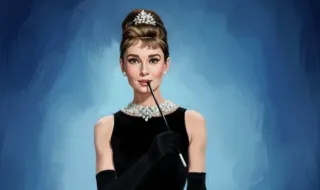
65 years after its premiere, “Breakfast at Tiffany“ remains one of the most recognizable films in Hollywood history. Audrey Hepburn in front of the Tiffany & Co. window, the black Givenchy dress and “Moon River“ have long been part of pop culture. Behind the elegant image of the 1961 classic, however, are tense photos, casting disputes and a song that was almost cut from the film.
The world premiere of “Breakfast at Tiffany“ takes place on October 5, 1961, at Radio City Music Hall in New York City, which means that the film will be 65 years old in October 2026. The Blake Edwards-directed romantic comedy is an adaptation of the 1958 novel by writer Truman Capote, and filming took place from October 1960 to February 1961.
Blake Edwards didn't want George Peppard
One of the main tensions behind the camera involved the casting of actor George Peppard for the role of writer Paul Varjak.
Director Blake Edwards was categorically not convinced that Peppard was the right actor. In Sam Wasson's book „Fifth Avenue, 5 A.M.“ Edwards recalls literally getting down on his knees before the producers and begging them not to cast him. The director preferred Tony Curtis, but the decision was ultimately made in favor of George Peppard.
The tension continued during filming. George Peppard was a graduate of the Actors Studio and followed an intense method of working that was very different from the more instinctive approach of actress Audrey Hepburn. According to TCM, Peppard analyzed scenes in detail and often challenged the director's decisions, and his conflicts with Blake Edwards almost reached a physical altercation at least once.
Tiffany & Co. opens its doors especially for the film
The opening scene, in which Holly Golightly eats breakfast in front of the Tiffany & Co. window on Fifth Avenue, was filmed early Sunday morning. It was among the first shots taken for the production.
Tiffany & Co. gave the film crew unusually wide access to its famous Manhattan store, including its interior. This allowed one of the most recognizable locations in cinema history to be filmed not as a studio set, but on the actual location.
The famous party was filmed with real champagne
The scene with the noisy party in Holly Golightly's apartment turned out to be no less complicated.
Blake Edwards wanted the atmosphere to look chaotic and natural, so he relied on actors who were able to improvise, instead of just standard extras. According to TCM's production history, the director even ordered real champagne for the set and encouraged the performers to come up with some of the guests' eccentric behavior themselves.
The result is one of the scenes that best showcases the bohemian atmosphere of New York, through which the film builds the image of Holly Golightly.
Audrey Hepburn's black dress sets a record
Among the greatest legacies of “Breakfast at Tiffany“ is the black dress by French designer Hubert de Givenchy, worn by Audrey Hepburn.
The collaboration between the actress and the designer began with “Sabrina“ and became one of the most influential partnerships between cinema and haute couture. Givenchy created Hepburn's key costumes for Breakfast at Tiffany's, while the rest of her wardrobe was provided by Paramount's costume department under the direction of legendary designer Edith Head.
One of the surviving black satin dresses was sold by Christie's in London in December 2006 for £456,200, against a preliminary estimate of just £50,000 to £70,000. At the time, the sale set a world auction record for a dress created for a film. The proceeds went to the charity City of Joy Aid.
“Moon River“ almost disappeared from the film
One of the most incredible moments in the history of the production is related to the song „Moon River“.
Composer Henry Mancini created the melody specifically with Audrey Hepburn's voice and image in mind, and the lyrics were written by Johnny Mercer. In the film, Holly Golightly performs the song with a guitar on the fire escape in front of her apartment.
After preview screenings, however, Paramount came up with the idea of removing the song. According to the widely circulated story, Audrey Hepburn reacted categorically with the words „Over my dead body“. The various testimonies about the exact exchange of lines differ, but it is well documented that „Moon River“ was indeed in danger of being dropped.
The decision to keep it turned out to be historic. In 1962, Henry Mancini and Johnny Mercer won the „Oscar“ for Best Original Song, and Mancini received another statuette for the film's score. „Breakfast at Tiffany“ received a total of five „Oscar“ nominations, including for Audrey Hepburn’s performance.
Mickey Rooney's role remains the most controversial part of the film
If Audrey Hepburn's image has stood the test of time, one of the other characters in „Breakfast at Tiffany“ today it is viewed very differently.
American actor Mickey Rooney plays Holly's Japanese neighbor, Mr. Yunioshi, with heavy makeup, false teeth, and an exaggerated accent. The portrayal received negative reviews upon its premiere, and over the following decades became one of the most frequently cited examples of racial stereotyping in classic Hollywood cinema. The AFI notes that another review in the Los Angeles Times from September 1961 called the performance unwarranted.
Mickey Rooney later admitted in his autobiography that he was ashamed of the role. Producer Richard Shepherd also later expressed regret for the choice, and criticism of the character grew stronger over the years.
Truman Capote did not want Audrey Hepburn at all
The curious thing is that today we can hardly imagine Holly Golightly with any other face, but writer Truman Capote was not happy with the choice of Audrey Hepburn.
Capote preferred Marilyn Monroe for the lead role and believed that she was closer to his literary heroine. Paramount, however, chose Audrey Hepburn, and it was the role of Holly Golightly that became one of the defining roles in the actress's career.
Hepburn herself also had doubts. Holly is a more sexually liberated and morally ambiguous character than the characters with which the actress had been associated up to that point. The film significantly toned down some aspects of Capote's novel and placed a stronger emphasis on the romantic story between Holly and Paul.
The first director was also changed
Blake Edwards was not the original choice to direct. When Paramount announced the project in January 1959, John Frankenheimer was listed as the director. However, his involvement ended early in the development.
According to TCM, Audrey Hepburn had reservations because she was not familiar with his work, and the studio felt that his style might be too dark for the project. Ultimately, the direction was entrusted to Blake Edwards, whose lighter comedic approach proved crucial to the film's final tone.
Sixty-five years after its premiere, it is the combination of Audrey Hepburn, Givenchy's style, Henry Mancini's music, and the image of New York that continues to define the cultural legacy of “Breakfast at Tiffany“. However, the film also remains a product of its time, both influential in its style and increasingly critically viewed for some of its decisions.