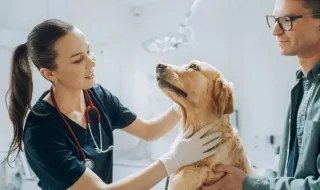
At home, your dog is lying down, limping, or refusing food. A few minutes later, as soon as he senses the car approaching the vet clinic, he suddenly stands up, starts moving, and seems almost healthy. This is not necessarily a sign that the problem has gone away. It is often a short-term stress response that changes the way the animal feels and shows discomfort.
Travel, unfamiliar smells, other animals, and the examination itself can trigger the "fight or flight" response. The body then releases hormones such as adrenaline and cortisol. They prepare the body for rapid action, increase heart rate and breathing, and can temporarily reduce the sensation of pain. A frightened dog may start pacing, pulling on the leash, or trying to escape. This makes it harder to spot lameness or weakness.
Veterinarian and behaviorist Melissa Bain tells Vetstreet that the surge of cortisol and adrenaline can sometimes mask underlying health issues. This is one reason why owners may say their dog was visibly sick at home but “was fine” in the office. In other cases, the symptom is simply intermittent and doesn’t show up all the time.
The clinic doesn’t necessarily show typical behavior
The American Animal Hospital Association says that the home environment often provides a more natural picture of a dog’s behavior. In the office, a dog may be tense, overexcited, or too focused on going out. This affects not only their gait, but also their reactions to touch, appetite, and how they show pain.
Stress can also change some of the metrics measured. A high heart rate or rapid breathing, for example, may be related to anxiety about the visit, not just the initial complaint. So the vet will correlate the examination with the owner's story, the duration of the symptoms, and behavior at home.
“There's a correlation: the owner is nervous, the dog is nervous,“ Frankie Jackson, a veterinary medical specialist and animal behavior consultant, told The Associated Press.Home video can be crucial
When a symptom only occurs at home, a short video can help more than a general description. Footage of limping, coughing, strange breathing, vomiting, a change in gait or unusual behavior is helpful. The owner can also record when the problem occurs, how long it lasts, what the dog has eaten and drunk, and whether there are any changes in urination or defecation.
The record is not a substitute for an examination. In the case of difficulty breathing, collapse, seizures, severe weakness, severe diarrhea, repeated vomiting, trauma, or pale, blue, or purple gums, one should not wait for the symptom to reappear at home. These signs may indicate an emergency, even if the animal temporarily seems better on the way to the veterinarian.
“Passing“ is usually a brief masking of the symptom, not proof that the cause has disappeared. The most accurate picture is obtained when the examination and observations at home are considered together.
Sources: apnews.com, vetstreet.com