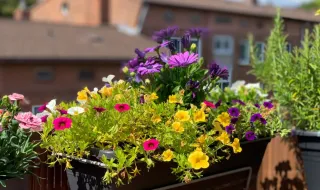
As the garden gradually loses its summer colors, the end of October leaves time to plant plants that will bloom in winter or early spring. Suitable choices include winter violets, wall violets, forget-me-nots, bluebells, primroses, daffodils and tulips.
Flowers for Color Even in the Cold Months
Winter violets are a practical choice for beds, balconies and pots. They tolerate cool weather and in mild winters can retain their colors for a long period. Plant them in well-drained soil in a sunny or slightly shaded spot.
Wall violets are planted in autumn as young plants. They form compact clumps and bloom in spring, and their colors combine well with tulips and other bulbous plants.
Forget-me-nots can be used to fill in the front of flower beds. According to BBC Gardeners’ World Magazine, they grow well in combination with taller tulips and wall violets and easily spread in the garden under the right conditions.
The white lily, also known as the little daisy, is among the spring seasonal plants that can be planted in beds or containers in October. Its low tufts are suitable for outlining paths and flower arrangements.
Primroses prefer moderately moist soil and a location with morning sun or partial shade. They are suitable for planting in the garden and in pots, as long as water does not stagnate around the roots.
Spring-flowering bulbs
Daffodils are planted as bulbs in autumn. They are among the most reliable spring flowers and can be left in the soil for re-flowering in subsequent years. It is a good idea to choose a location with sufficient light and drainage.
Tulips can also be planted until the end of October. According to the Royal Horticultural Society, autumn is the main season for planting spring-flowering bulbs, and for tulips, planting can continue into November. “Continue planting spring-flowering bulbs“, the society advises in its October calendar.
The general rule is to plant the bulb at a depth of about two to three times its own height, with the pointed end up. A drainage hole is necessary for containers, and in heavy, wet soil, it is a good idea to improve drainage with a suitable substrate or coarse material.
Gardeners should choose firm bulbs without mold or soft spots. Planting should not be done in waterlogged soil or just before a prolonged frost. Timing may vary depending on temperature and soil conditions in different regions.
Sources: tollbit.gardenersworld.com, theguardian.com