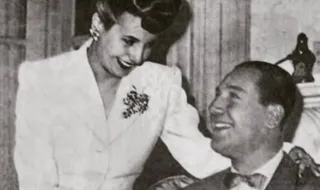
In Junín, there were no crowds, formal speeches or a glamorous reception. There was a civil registry, a few signatures and a couple who preferred to keep their most important day out of the spotlight. On October 22, 1945, Juan Domingo Perón and Eva María Duarte were married in the province of Buenos Aires.
The wedding came just five days after one of the most dramatic events in Argentine politics. On October 17, Perón was released after mass demonstrations in his support. By then, he had been removed from his posts and detained on Martin Garcia Island. Upon his return to Buenos Aires, he was no longer just an influential military and political figure. He became a presidential candidate, around whom a new social movement was formed.
Discreet ceremony in Junín
The official act was registered in Junín under number 182. It lists the names of Juan Domingo Perón and María Eva Duarte. The document was signed by Hernán Antonio Ordiales, and witnesses were Eva's brother - Juan Duarte, and Domingo Mercante, one of Perón's closest associates.
It is precisely around the date and place of the wedding that different versions have emerged over the years. Some publications mention October 18 or a secret ceremony in Buenos Aires. However, the official civil record states that the marriage was concluded on October 22 in Junín. Historical accounts link the choice of the city to Eva's closeness to her family and the years she spent there.
Later, Eva explained their relationship with a short phrase that became one of the most quoted descriptions of the couple:
„We married because we loved each other, and we loved each other because we both wanted the same thing.“From actress to political symbol
At the time of the wedding, Eva was known as an actress and radio host. Marriage to Perón changed the direction of her life. She gradually left the stage and became his most recognizable ally in the eyes of labor organizations and poor Argentines.
On December 10, 1945, the two also had a church wedding in the church of „Saint Francis of Assisi“ in La Plata. A few months later, Perón won the presidential election, and Eva became the first lady of Argentina.
After that, she was no longer just the wife of the head of state. Eva Perón supported the introduction of women's suffrage, worked for social programs and built her own political image. For her supporters, she was “Evita“ - defender of the poor; for opponents of Peronism - a powerful figure in a controversial regime.
That is why the small ceremony in Junín remains more than a family event. It marks the moment when the personal relationship between the military leader and the young actress turned into a political alliance that left a lasting mark on Argentina.
Sources: infobae.com, elespectador.com, theguardian.com