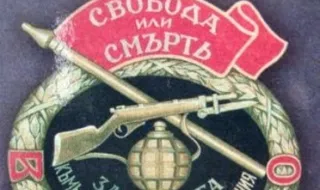
Six activists gathered in Thessaloniki on October 23, 1893, and laid the foundation for a revolutionary organization that would become the main driving force of the struggle in Macedonia and the Edirne region over the next decade. Among them were Dr. Hristo Tatarchev, Damian Gruev, Ivan Hadzhinikolov, Petar Poparsov, Andon Dimitrov and Hristo Batandzhiev.
The meeting took place at a time when Macedonia and the Edirne region were part of the Ottoman Empire, and the Christian population was expecting reforms stipulated in Article 23 of the Treaty of Berlin. The National Library states that the committee was created to counter Serbian and Greek propaganda and to organize a struggle for the freedom of Bulgarians in both regions.
From a committee to a revolutionary organization
In its early period, the structure was known as the Bulgarian Macedonian-Adriatic Revolutionary Committees. However, for the first years, there are differences in the historiographical descriptions of the name and the moment when it was officially adopted. It is undeniable that at the beginning of the movement a secret committee network was built, and in 1894 the formation of a statute and rules of operation began.
The organizers turned to the experience of the Bulgarian Renaissance. The principles of Vasil Levski's Internal Revolutionary Organization were used as a model for building a network of central, district, sub-district and village committees. Dr. Hristo Tatarchev was elected the first chairman of the Central Committee, and Damyan Gruev took over the functions of secretary-treasurer.
Autonomy as the main goal
An important stage occurred in 1896, when the Thessaloniki Congress adopted a statute and defined the political program of the organization. In the document, the goal was formulated as “full political autonomy of Macedonia and Adrianople“.
This formula has both practical and political significance. It allows the organization to present the struggle as the work of the local population, and not as a direct annexation of the regions to another state. At the same time, the early statutes and public documents of the movement clearly reflect the place of the Bulgarian community and the Bulgarian Exarchate in the then social and political environment.
The name with which it remains in history
In 1902, the organization began to be called the Secret Macedonian-Adria Revolutionary Organization, and after 1905, the name Internal Macedonian-Adria Revolutionary Organization – VMORO was established. Under this name, it was associated with the preparation and conduct of the Ilinden-Preobrazhensko Uprising in 1903.
The initial meeting of October 23, 1893 was not a large congress and did not immediately create a developed network. Its significance lies in the decision of six activists to transform the scattered discontent and local initiatives into a centralized revolutionary movement. From this small group in Thessaloniki began the organization that ten years later would confront Macedonia and the Adrianople with the largest uprising against Ottoman rule in the early 20th century.
Sources: bgnes.bg, bulgarianhistory.org