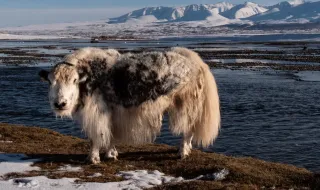
Small bone fragments from the Denisova Cave in Altai have revealed a previously unknown large Ice Age mammal. Genetic analysis shows that the animal is a close relative of the modern yak, but belongs to a separate species. The researchers have provisionally named it “Yak X“.
The discovery was made not by the shape of the bones, but by ancient DNA. The remains were too small and uncharacteristic to allow a reliable identification of the species based on anatomical features alone.
DNA identifies the species
The scientists examined a total of 20 bone fragments. 14 of them were found in Denisova Cave, and the other six came from other places in the wider Altai-Sayan region. The material yielded 20 nuclear genomes spanning over 200,000 years.
Comparison with genomes of modern and extinct cattle shows that “Yak X“ is a distinct species, not an unknown population of the known yak. The genetic lineage began to diverge from that of today's yaks at least 400,000 years ago.
“It is unusual for a large mammal species to be recognized from small, unidentifiable fragments,“ says evolutionary geneticist Lav Dalen of the Center for Paleogenetics.It lived for hundreds of thousands of years
Genetic data indicate that the animal inhabited parts of Asia during the Middle and Late Pleistocene. According to the study, its population has survived prolonged climate changes, but suffered a decline in numbers during the later stages of the Pleistocene.
The exact moment of the extinction of “Yak X“ has not yet been established. Scientists indicate that the species may have disappeared without being recognized in paleontological collections, since its remains are difficult to distinguish by external features.
The study is published in Current Biology. It complements data on the animal world around Denisova Cave, where remains of Denisovans, Neanderthals and other representatives of the Pleistocene fauna have also been found.
The discovery of “Yak X“ shows that the Altai-Sayan region was a center of a significant diversity of large mammals. Some of these genetic lines have become extinct, leaving no easily recognizable fossil traces.
Source: kelo.com