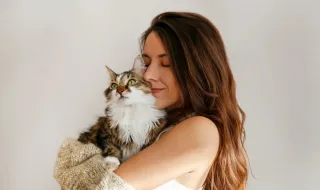
Cats and their owners appear to share a measurable hormonal bond. This is according to a study by scientists at Kyoto University, which included 19 owners and 29 cats.
The team measured levels of oxytocin and cortisol in urine. Oxytocin is associated with attachment and social relationships, while cortisol is released in response to stress. The closeness between humans and animals was tracked using small Bluetooth devices attached to the cats' collars. The owners also completed questionnaires about their mood.
The results showed that owners with higher levels of oxytocin also had higher levels of the same hormone in their cats. Higher oxytocin in animals was associated with lower levels of cortisol in humans.
Cat owners with higher levels of oxytocin were less likely to report anger, confusion, anxiety and depression. People who spent more time physically close to their animals also described themselves as more energetic and cheerful. Positive mood was associated with daily closeness, not with the length of time they lived together.
In a further test,cats with higher levels of oxytocin were more willing to approach a person. According to the study's lead author, Saho Takagi, one possible reason for the observed connection is physical contact between the animal and its owner.
“I think this could be because oxytocin levels increase in both the owner and the cat during interaction, such as petting. The fact that the person and the animal interact helps build the bond between them,“ says Takagi.
The researchers emphasize that the results show dependencies, but do not prove that cats directly reduce stress or improve their owners' moods. It's possible that people who feel better simply spend more time with their animals.
“To talk about a cause, hormones would have to be measured at several different times - both before and after petting,“ Takagi said.
The study adds to evidence that the bond between people and their pets may have not only an emotional but also a biological dimension. However, the small number of participants and the exploratory nature of some of the analyses limit the ability to generalize the results to all cats and owners.