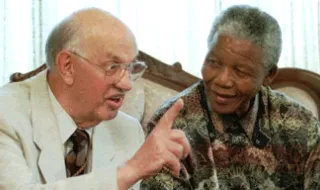
On October 31, 2006, Peter Willem Botha - the man who led South Africa through one of the most tense periods in apartheid history - died at his home near Wilderness. He was 90 years old. Decades later, his name remained associated not with the transition to democracy, but with the old regime's attempt to survive through limited reforms and forceful measures.
Botha was Prime Minister from 1978 to 1984, and then became the country's first executive state president, remaining in office until 1989. He inherited a system built on racial division, in which the black majority was deprived of political rights. Botha did not create apartheid, but he led it at a time when domestic resistance, international sanctions and economic pressure were already making the old model increasingly difficult to maintain.
Reform without political equality
In 1983, his government adopted a new constitution that created a three-chamber parliament. It gave limited representation to coloureds and South Africans of Indian descent, but the black majority remained outside the national political system. Thus, Botha proposed a change in the structure without questioning its basic principle - the political supremacy of the white minority.
His rule was also marked by states of emergency, mass arrests and actions by the security forces against opponents of the regime. The Truth and Reconciliation Commission later found that during the years in which Botha headed the government, serious human rights violations and illegal actions by the police and the army were committed.
The “Rubicon“ speech and the missed turn
On August 15, 1985, the world expected Botha to announce the release of Nelson Mandela and deeper political changes. Instead, his “Rubicon“ speech did not offer a specific program for ending apartheid. The message was perceived as a refusal to make a decisive turn, and the subsequent international reaction contributed to the further isolation of South Africa.
Botha left the presidency in August 1989 after a conflict with F. Willem de Klerk. It was de Klerk who later legalized the African National Congress, released Mandela, and began negotiations that led to the first democratic elections in 1994.
Refusal to testify
After the end of apartheid, Botha refused to appear before the Truth and Reconciliation Commission, which investigated political violence and human rights violations. The chairman of the commission, Archbishop Desmond Tutu, stated: “Written responses can never replace appearing in person to answer our questions.“
Botta was convicted of contempt of court in 1998, but the conviction was overturned on appeal. For the rest of his life, he refused to accept the role the commission assigned him in investigating the violence perpetrated by the state apparatus.
The historical legacy of P. W. Botha therefore remains contradictory, but not unclear: he is both a representative of the attempt at controlled change and one of the last defenders of a system that can no longer be preserved.
Sources: rte.ie, cbsnews.com, news24.com