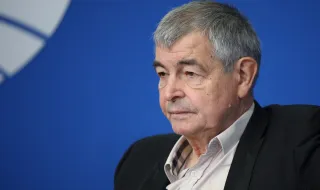
On November 7, Stefan Sofiyanski turns 75. He was born in 1951 in Sofia and has remained connected to the city both through his professional career and through the longest period of his political career – ten years as its mayor.
Before entering national politics, Sofiyanski graduated in Statistics from the Karl Marx Higher Institute of Economics in 1974. He worked as an economist and research associate, and at the beginning of the transition he held senior positions in the state administration.
From the UDF to Sofia Municipality
In 1991, he headed the Committee on Posts and Telecommunications. Two years later, he became deputy chairman of the UDF, and in 1994 he was elected as a member of the 37th National Assembly.
In 1995, Sofiyanski won the election for mayor of Sofia. He remained in office until 2005 after receiving support for three terms. During this period, work began on drafting Sofia’s Master Plan – the document that determines the city’s long-term development.
Prime minister in the year of the crisis
The shortest but most tense episode of his political career is associated with 1997. Following the severe economic and political crisis, Sofiyanski was appointed caretaker prime minister in February. His cabinet governed until the early parliamentary elections in April of the same year.
During the caretaker government’s term, the currency board was introduced, and Bulgaria officially applied for NATO membership. Sofiyanski later described stabilizing the country as the main task he had undertaken upon becoming prime minister.
“The confrontation of Bulgarians against Bulgarians on January 10, 1997, must not be repeated,” Sofiyanski said in an interview with the Bulgarian National Radio in 2024.After his mayoral term
In 2001, Sofiyanski founded the Union of Free Democrats. In the 2005 parliamentary elections, he was elected as a member of the 40th National Assembly and remained a member of parliament until 2009.
His name remains associated with the transition – with the crisis of 1997, the introduction of the currency board, the beginning of the road toward NATO membership and the administration of Sofia for three terms. Today, Sofiyanski continues to comment on the country’s political and economic life, often returning to the decisions and events of the years when he held his highest public offices.
Sources: bnrnews.bg, dnes.bg, bgdnes.bg