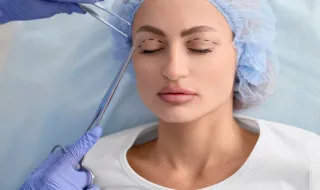
Buccal fat removal, Botox, fillers and some aggressive surgeries are among the 15 cosmetic procedures that skin and aesthetic experts say they personally would not choose. The reasons range from temporary or unpredictable results to possible complications and changes that are difficult to correct.
In the list published by Daily Mail, the specialists stress that their personal decision does not mean a universal ban on aesthetic procedures. Joan Evans, a skin expert, points out that she has seen many very good results when procedures are performed by experienced surgeons.
“The goal should not be to look like someone else, but like the best version of yourself at any age,” Evans says.
Procedures that can change facial volume
The most frequently avoided procedure among those listed is buccal fat removal. It involves removing part of the fatty tissue inside the cheeks. Smita Ahluwalia warns that the face naturally loses fat and volume with age.
“Why would I want to speed up that process?” Ahluwalia asks.
Dr. Arti Singh adds that the operation is performed close to branches of the facial nerve and the parotid salivary gland duct. In her view, this creates a risk of nerve weakness or paralysis, as well as damage to the salivary duct.
Ahluwalia would also not choose lip fillers or other facial fillers. She identifies possible problems including migration of the material, lumps, asymmetry, a puffy appearance and, in rare cases, the blockage of a blood vessel resulting in tissue damage.
Thread lifts are also not among her preferred procedures. According to Ahluwalia, the effect is temporary, while possible complications include irregularities, infection, changes to the tissues and threads visible beneath the skin.
Botox, peels and skin procedures
Ahluwalia says she would not use Botox because she is concerned about restricting natural facial expressions. She points out that with an immobile forehead, facial expressions can look unnatural, while changes in one area can draw attention to other parts of the face.
Dermaplaning, which removes fine hairs and dead skin cells, is also among the procedures she avoids. If performed too frequently or aggressively, mechanical exfoliation can disrupt the skin barrier and cause irritation and sensitivity.
According to her, deep chemical peels are too aggressive and require a prolonged recovery. Ahluwalia draws attention to the risk of hyperpigmentation, scarring and permanent loss of pigment, especially in darker skin.
She does not believe that 24-karat gold facials have a sufficiently convincing scientific basis. In her view, the temporary glow and feeling of hydration are probably due to the other ingredients in the product, rather than the gold itself.
Surgeries that are difficult or impossible to correct
Dr. Singh would not choose so-called “Turkey teeth” – aggressively filing down healthy teeth and placing crowns for a short period. She warns that the procedure can damage the nerve, lead to pain, root canal treatment or tooth loss, while subsequent care after returning from abroad may be difficult.
Other procedures on the list include reshaping the jaw into a V-line, cat-eye surgery, dimpleplasty and extreme rhinoplasty. Excessively reducing the nose can compromise the support of the nasal cartilage, which may worsen breathing, alter the shape of the nose and lead to asymmetry.
Evans is also cautious about blepharoplasty when too much skin or fat is removed around the eyes. According to her, overcorrection can change the eyes’ natural appearance and cause problems with closing the eyelids, dryness or irritation.
Facial laser hair removal, particularly for fine hairs, is also identified as a procedure with a possible unwanted effect. Ahluwalia notes that in some people it can stimulate additional hair growth, especially in cases of hormonal problems.