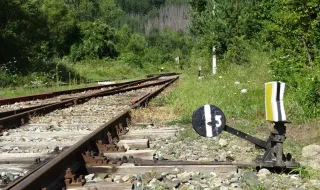
The first train in Russia departed from Saint Petersburg for Tsarskoye Selo on October 30, 1837, according to the Julian calendar. The date corresponds to November 11 according to the Gregorian calendar and is regarded as the beginning of Russia’s railways. The train covered approximately 23 kilometers in 35 minutes.
Emperor Nicholas I attended the ceremony. The train consisted of a steam locomotive and eight carriages, and ran along the line designed by Austrian engineer Franz Anton von Gerstner. The route was built as an experiment intended to demonstrate whether rail transport could operate in the conditions of the Russian winter and across the vast distances of the empire.
The road to the first train
Construction began in 1836 after a project was approved for a railway line from Saint Petersburg to Tsarskoye Selo, with an extension to Pavlovsk. Gerstner proposed a route linking the capital with the imperial residence and the popular summer resort near Pavlovsk.
Before the locomotives were delivered from abroad, horse traction was used on parts of the route. The first trials showed that two horses could pull a passenger train, but the steam engine gradually took the leading role. From April 4, 1838, traffic on the line was operated entirely by steam locomotives, and on May 22 of the same year, the section to Pavlovsk was opened. Thus, the entire route from Saint Petersburg to Pavlovsk reached 27 kilometers.
From attraction to the foundation of the railway network
Initially, the Tsarskoye Selo Railway served not only a transport function but also an entertainment one. The journey to the imperial residence and Pavlovsk became a new experience for the capital’s public. Later, the line was also used to test rolling stock and train railway personnel.
“Sankt-Peterburgskiye Vedomosti” described the first journey as proceeding with “a speed terrifying to the imagination,” TASS reports. In the following years, the railway proved to be much more than a short line for trips outside the city: it provided the practical experience needed to build longer routes in Russia.
The experience gained with the line to Tsarskoye Selo preceded the construction of the railway connecting Saint Petersburg and Moscow, which opened in 1851. Thus, the small route built in 1837 became the starting point for the expansion of Russia’s railway network.
Sources: rzdhistory.tass.ru, kommersant.ru, fontanka.ru